Call us:



Choosing an English language institute is no longer only
about learning grammar or passing an examination. For a Bangladeshi learner,
English can influence university admission, employment, migration, freelancing,
professional communication, and personal confidence. A student may understand
grammar rules but still feel nervous while speaking. A job seeker may have good
academic results but fail to explain ideas clearly during an interview. A
business owner may lose international clients because writing an email feels
difficult. These situations show that English is not simply a school subject.
It is a practical skill connected with everyday opportunities.
The central argument of English Language Institute: A
Complete Guide for Bangladeshi Learners is that a useful institute must do more
than deliver lectures. It should identify the learner’s level, create regular
speaking opportunities, correct pronunciation, develop vocabulary, strengthen
listening skills, and provide a clear learning path. It must also understand
the social and financial realities of Bangladesh.
Many learners cannot afford expensive courses. Some live
outside Dhaka and cannot attend physical classes. Others have study gaps, weak
educational backgrounds, limited internet access, or fear of making mistakes. A
responsible institute should respond to these problems with affordable fees,
live online classes, recordings, flexible schedules, quizzes, feedback, and
beginner-friendly teaching.
Bangladesh received a score of 506 and ranked 62nd globally
in the EF English Proficiency Index 2025. The index also showed differences
between reading, listening, writing, and speaking performance. These figures
suggest that learners need balanced practice instead of focusing on only one
skill. However, the EF index is based on self-selected test takers, so it
should be treated as an indicator rather than a complete picture of every
Bangladeshi learner.
Why English Learning Has Become More Important in Bangladesh
The need for English has grown because education,
employment, technology, and international communication are becoming more
connected. Universities use English textbooks and research papers.
Multinational companies conduct interviews and meetings in English. Freelancers
communicate with overseas clients through messages, calls, and project
proposals. Students planning to study abroad need IELTS, PTE, TOEFL, or another
accepted language test.
The British Council’s work in Bangladesh connects English
ability with wider employability and enterprise skills. Its higher education
initiatives have also focused on improving the English skills of university
students and teachers. This indicates that English is not viewed only as an
examination subject. It is part of academic development and workplace
readiness.
At the same time, online learning has become more practical.
Bangladesh had about 82.8 million internet users at the end of 2025,
representing around 47 percent of the population. This growth allows learners
from districts, small towns, and rural communities to join live classes without
travelling to Dhaka. Yet it also reminds us that many people still experience
weak connections, costly data packages, or limited devices.
English Language Institute: A Complete Guide for Bangladeshi
Learners therefore treats online education as an opportunity, but not as a
perfect solution for everyone.
What Should a Good English Institute Actually Teach?
A complete course should develop the ability to use English
in real situations. Memorising definitions is not enough. Learners need
repeated practice and useful correction.
A balanced programme should include:
- Sentence
construction from the basic level
- Everyday
spoken English practice
- Pronunciation
and sound correction
- Practical
grammar and tense use
- Listening
activities with different accents
- Vocabulary
development in context
- Reading
for meaning and information
- Formal
and informal writing
- Interview
and presentation practice
- Confidence-building
activities
- IELTS,
PTE, TOEFL, or admission-test guidance where relevant
- Regular
quizzes, homework, and teacher feedback
Imagine that Rafi, a university student from Tangail, knows
the rules of present and past tense. When a teacher asks, “What did you do
yesterday?” he becomes silent. His problem is not a complete lack of grammar
knowledge. He has never practised turning that knowledge into quick speech.
A useful instructor may first teach Rafi a simple pattern:
“I went to…”
“I met…”
“I studied…”
“I completed…”
Rafi then uses those patterns to speak about his own day.
This step-by-step method helps him move from theory to real communication.
Spoken English Should Begin with the Learner’s Reality
Many Bangladeshi learners feel embarrassed about
pronunciation. They worry that classmates will laugh at them. Some try to copy
an artificial foreign accent. Others speak too softly because they fear making
grammatical mistakes.
Good spoken English training should not shame learners for
having a Bangladeshi accent. The first goal should be clear and understandable
speech. Learners can gradually improve stress, rhythm, sounds, and sentence
flow.
The course information supplied for the Spoken English
programme presents a beginner-friendly approach. The programme is taught by
Abdul Khalek, also known as Shanto. It is described as suitable for learners
with study gaps or limited formal education. The teaching method focuses on
simple rules rather than heavy grammar memorisation.
The listed programme features include:
- A
one-month course duration
- A
course fee of Tk 990
- Classes
four days each week
- Live
Zoom sessions
- A
night schedule from 9:00 p.m. to 11:00 p.m.
- Live
and recorded learning materials
- Quizzes
for practice
- Step-by-step
sentence-building lessons
- Tense
and structure instruction
- IELTS
speaking tips in the final stage
The programme information mentions both 15 live Zoom classes
and a package of 24 live classes, 24 recorded classes, and 24 quizzes. A
learner should confirm the current number of live sessions before enrolling
because these two descriptions do not fully match.
The final three live sessions are described as being
conducted by Sayedul Abrar, identified in the course information as an IELTS
expert and a British Council master trainer. Prospective students should ask
for current trainer details, class schedules, and course terms before making
payment.
This type of low-cost programme may help financially
constrained learners. However, price alone should never be the only basis for
selection. Learners should also examine teaching quality, interaction,
feedback, class size, and access to recordings.
English Language Institute: A Complete Guide for Bangladeshi
Learners and the Importance of Vocabulary
A learner cannot communicate freely without enough words.
However, memorising a long dictionary list often produces weak results.
Students may remember a word during an examination and forget it a few days
later.
Vocabulary becomes more useful when words are learned
through relationships, examples, situations, and repetition. For example,
instead of learning only the word “decide,” a learner may connect it with:
- Decision
- Decisive
- Indecisive
- Decide
to
- Make a
decision
- Final
decision
- Difficult
decision
- Decision-making
This creates a family of words rather than one isolated
item.
The supplied “All in One Vocabulary” e-book by Sayedul Abrar
uses a Spider Method. A root word is placed at the centre of a diagram, while
related words and expressions spread around it. The material claims that
learners can use 100 main words to study more than 1,000 connected words.
The method can be especially helpful for visual learners
because they see the connection among words. It may also support IELTS, PTE,
TOEFL, university admission preparation, and job examinations. Still, no
vocabulary method can guarantee a top score. Results depend on practice,
understanding, revision, test strategy, and the learner’s starting level.
The e-book is protected by a 2025 copyright statement from
IELTS Professor. Learners should purchase or access it through an authorised
source and should not copy, reproduce, or distribute the publication without
permission.
How to Identify a Quality Instructor
A famous teacher is not automatically the right teacher for
every learner. Some instructors are excellent with advanced students but
struggle to teach beginners. Others provide entertaining lectures but give
little personal feedback.
A capable instructor should be able to:
- Explain
difficult points in simple language
- Correct
mistakes without humiliating learners
- Encourage
students to speak
- Use
practical examples from Bangladeshi life
- Provide
clear homework and feedback
- Track
improvement over time
- Adjust
lessons for beginner and advanced learners
- Demonstrate
relevant training or teaching experience
- Avoid
unrealistic score guarantees
- Maintain
professional behaviour
Suppose Nusrat joins a large course where the teacher speaks
for two hours. She listens carefully but speaks for only one minute. After one
month, she has learned several rules but still cannot hold a conversation.
Later, she joins a smaller practice group. Every learner
must speak, answer questions, describe pictures, and receive corrections.
Within six weeks, she becomes more confident. Her progress comes not from a
magical shortcut but from active participation.
This example shows why English Language Institute: A
Complete Guide for Bangladeshi Learners gives more importance to learning
design than advertising.
Online Classes or Physical Classes: Which One Is Better?
Both formats can work. The correct option depends on the
learner’s schedule, location, budget, personality, and internet access.
Online classes are often useful for:
- Students
living outside major cities
- Office
workers with limited travel time
- Women
who prefer learning from home
- Learners
seeking lower course fees
- Students
who need recorded lessons
- People
comfortable with digital platforms
Physical classes may be better for:
- Learners
who lose focus online
- Students
with unstable internet
- People
who need face-to-face encouragement
- Learners
who want direct group conversation
- Students
who require a fixed study routine
A hybrid model can provide a helpful balance. A student may
attend live online lessons, watch recordings, complete quizzes, and join an
occasional physical speaking session.
Before enrolling in an online course, check whether the
institute provides recordings when electricity or internet problems cause an
absence. Also ask whether live classes are interactive or mainly one-way
lectures.
Challenges Commonly Faced by Bangladeshi Learners
Financial pressure
A learner may need to manage tuition fees, internet costs,
transport, books, and examination fees. Expensive programmes are not possible
for every family.
The practical solution is to compare the complete cost
rather than the advertised fee. A Tk 990 online programme may be affordable,
but the learner should check whether there are separate charges for materials,
examinations, certificates, or extended access.
Fear of making mistakes
Many students remain silent because they believe they must
speak perfect English. This belief slows improvement.
Mistakes are a normal part of language learning. A learner
should focus first on delivering a clear message. Accuracy can improve through
correction and repetition.
Cultural hesitation
In some families or communities, speaking English may be
seen as showing off. Female learners may also face restrictions related to
travel or late classes.
Online programmes, women-friendly study groups, recorded
lessons, and family communication can reduce these barriers.
Weak basic education
Some learners have passed school examinations without
developing practical English. They may feel ashamed to begin again.
A good course should offer placement testing and
beginner-level support. Starting from basic sentence patterns is not a failure.
It is a responsible learning decision.
Study gaps
A person returning to education after five or ten years may
forget grammar and vocabulary. Such learners need patient explanations and
regular revision.
The supplied Spoken English programme directly mentions
support for people with study gaps, which may be useful for adult learners who
are restarting their education.
English Language Institute: A Complete Guide for Bangladeshi
Learners on Building a Daily Routine
A course cannot create fluency without personal practice.
Even an excellent teacher cannot speak on behalf of the learner.
A realistic daily routine may include:
- Ten
minutes of listening
- Ten
minutes of speaking aloud
- Ten
minutes of vocabulary review
- Ten
minutes of reading
- Ten
minutes of writing
- Five
minutes of correcting previous mistakes
A learner does not need perfect conditions. While
travelling, he can listen to an English conversation. At home, she can describe
the room in English. A job seeker can practise common interview answers. A
student can record a one-minute voice message and compare it after one month.
Consider Hasan, a diploma graduate from Cumilla. He could
not afford a premium course, so he enrolled in an affordable online programme.
He attended night classes, watched recordings after power cuts, and practised
speaking with a friend through WhatsApp. After three months, he could introduce
himself, explain his technical skills, and answer basic interview questions.
Hasan’s success did not come only from course enrolment. It
came from consistency.
How to Compare Course Fees Without Sacrificing Quality
Low fees can make education accessible. High fees may
support smaller groups, experienced teachers, advanced materials, and personal
evaluation. Neither low nor high price automatically proves quality.
Ask these questions before paying:
- How
many live sessions are included?
- How
long is each session?
- Are
recordings available?
- How
many learners are in one batch?
- Will I
receive personal speaking correction?
- Are
books or e-books included?
- Is
there a refund or batch-transfer policy?
- Are
trainer credentials verifiable?
- Will I
receive a certificate?
- How
long can I access the materials?
A course costing Tk 990 may offer excellent value for a beginner when it includes live lessons, recordings, quizzes, and a clear curriculum. However, the learner must still verify current information.
General English and test preparation are connected, but they
are not identical.
General English develops communication ability. Test
preparation teaches question types, timing, scoring rules, and strategies. A
learner with weak English may struggle even after learning many IELTS or PTE
tricks.
A sensible path is:
- Build
basic grammar and sentence structure
- Improve
listening and speaking
- Develop
vocabulary in context
- Learn
reading and writing techniques
- Take a
diagnostic test
- Begin
examination-specific practice
- Complete
timed mock tests
- Analyse
errors
Free IELTS tips in a spoken English course can introduce
learners to test requirements. However, students targeting a high band may
later need detailed preparation, assessed writing, mock speaking tests, and
individual feedback.
No honest institute should promise a guaranteed band or
score without understanding the student’s level and effort.
Measuring Real Progress
A certificate shows that a learner attended or completed a
programme. It does not always prove communication ability.
Real progress may include:
- Speaking
for two minutes without stopping
- Using
fewer Bangla words during a conversation
- Understanding
a short English video
- Writing
a clear email
- Answering
interview questions confidently
- Using
new vocabulary correctly
- Recognising
and correcting personal mistakes
- Achieving
better mock-test scores
Record your voice on the first day. Repeat the same topic
after one month. This simple comparison may show improvement more clearly than
memory.
English Language Institute: A Complete Guide for Bangladeshi
Learners recommends monthly assessment because learners need evidence of
improvement, not only motivation.
A Final Selection Checklist
Before choosing an English language institute, make sure
that it offers:
- A
level assessment
- A
written curriculum
- Qualified
and supportive instructors
- Sufficient
speaking opportunities
- Pronunciation
correction
- Practical
vocabulary lessons
- Recordings
or replacement support
- Transparent
fees
- Reasonable
class size
- Clear
access duration
- Genuine
learner reviews
- A
safe and respectful environment
Do not join only because an advertisement says “fluent in 30
days.” A one-month course can provide a strong beginning, but fluency normally
requires continued exposure and practice.
Summary
English Language Institute: A Complete Guide for Bangladeshi
Learners shows that the right learning centre should combine practical
speaking, pronunciation, vocabulary, grammar, listening, feedback, and
affordable access. Bangladeshi learners should compare course content, trainer
quality, class interaction, fees, recordings, and assessment methods.
Affordable programmes and visual vocabulary tools can support progress, but
regular personal practice remains essential. Choose a course that respects your
current level and helps you use English in real life.
Frequently Asked Questions
1. How do I choose the best institute as a complete beginner?
- Begin with a centre that offers a level assessment.
- Ask whether the course starts with basic sentence
structures.
- Check whether teachers explain lessons in simple language.
- Make sure beginners receive regular speaking opportunities.
- Avoid programmes that immediately begin with advanced
examination tricks.
- Choose an environment where mistakes are corrected
respectfully.
2. Can I become fluent through a one-month Spoken English course?
- A month can help you build a strong foundation.
- You may learn useful structures and overcome speaking fear.
- However, complete fluency normally requires longer practice.
- Your progress will depend on attendance and daily speaking.
- Recorded classes and quizzes can support regular revision.
- Continue practising after the official course ends.
3. Is a Tk 990 course reliable?
- A low fee does not automatically mean low quality.
- Online delivery can reduce classroom and travel expenses.
- Check the number of live sessions before paying.
- Ask whether recordings, quizzes, and materials are included.
- Confirm trainer details and learner-support arrangements.
- Judge the programme by teaching quality, not price alone.
4. What should I confirm about the supplied Spoken English course?
- Confirm the current starting date and batch schedule.
- Ask whether it contains 15 or 24 live sessions.
- Check how long recordings remain accessible.
- Confirm whether quizzes and certificates are included.
- Ask who will conduct the final IELTS-related classes.
- Request written payment and batch-transfer terms.
5. Can a student with a long study gap learn spoken English?
- Yes, a study gap does not prevent language learning.
- The student may need more revision and patient instruction.
- A beginner-friendly course should rebuild the basic
foundation.
- Short daily practice is better than occasional long
sessions.
- Recorded lessons are useful when a topic feels difficult.
- Progress should be compared with the learner’s own starting
level.
6. Are online English classes effective for district-level students?
- Online classes can remove the need to travel to Dhaka.
- They may also reduce accommodation and transport costs.
- Live interaction is necessary for speaking improvement.
- Recordings help during electricity or network interruptions.
- Students should use headphones and a quiet study space.
- A phone may work, but a larger screen is often better.
7. How can I improve pronunciation without copying a foreign accent?
- Focus on clarity rather than imitating an accent.
- Learn the correct production of difficult English sounds.
- Listen to short audio clips and repeat each sentence.
- Record your voice and identify unclear words.
- Practise stress, pauses, and sentence rhythm regularly.
- Ask a teacher to correct repeated pronunciation problems.
8. Is the Spider Method useful for learning vocabulary?
- It can help learners connect related words visually.
- One root word may lead to several useful expressions.
- Connections often support memory better than isolated lists.
- Learners must still practise meanings and sentence use.
- Regular revision is needed to retain the vocabulary.
- The method should support reading and speaking, not replace
them.
9. Can the All in One Vocabulary e-book guarantee a top score?
- No learning material can honestly guarantee a top score.
- The e-book may increase vocabulary depth and awareness.
- Test results also depend on grammar and comprehension.
- Timing, strategy, confidence, and practice are equally
important.
- Learners must use new words correctly in context.
- Mock examinations are needed to measure readiness.
10. Should I choose general English or IELTS preparation first?
- Choose according to your current ability and goal.
- Beginners usually benefit from general English first.
- It strengthens vocabulary, grammar, listening, and speaking.
- Intermediate learners may combine both types of preparation.
- A diagnostic examination can identify the correct starting
point.
- Test tricks cannot replace weak basic language ability.
11. How many hours should I practise English every day?
- Thirty to sixty minutes can be effective when used
regularly.
- Divide the time among listening, speaking, reading, and
writing.
- Spend extra time on your weakest skill.
- Use short activities when your schedule is busy.
- Daily practice is more valuable than one weekly session.
- Track completed activities in a notebook or mobile app.
12. What can I do when my family cannot afford an expensive course?
- Compare affordable online programmes and free learning
materials.
- Ask whether an institute allows instalment payments.
- Use recordings to avoid paying for repeated courses.
- Create a speaking group with trusted friends.
- Practise through free videos, podcasts, and reading
resources.
- Spend money only after checking the full course details.
13. How can shy learners become confident speakers?
- Begin by speaking alone for one minute daily.
- Then practise with a supportive friend or family member.
- Use familiar topics such as study, work, and hobbies.
- Prepare useful sentence starters before conversations.
- Accept that mistakes will happen during improvement.
- Confidence grows through repeated action, not waiting.
14. Are certificates from English courses important for jobs?
- A certificate may strengthen a CV in some situations.
- However, employers often assess practical communication
directly.
- Interview performance can reveal the learner’s real ability.
- Writing tasks may also be included in recruitment.
- Choose skill development before collecting many
certificates.
- Keep examples of presentations, writing, or test results.
15. How do I know whether my English is truly improving?
- Record the same speaking topic every month.
- Compare sentence length, pauses, pronunciation, and
vocabulary.
- Complete regular listening and reading exercises.
- Keep corrected writing samples in one folder.
- Ask a teacher for measurable feedback and targets.
- Real improvement appears in tasks you can perform
independently.
Conclusion
English Language Institute: A Complete Guide for Bangladeshi
Learners is ultimately about making an informed and realistic choice. The most
suitable programme is not always the most expensive or most heavily advertised
one. It is the programme that understands your level, gives you enough
practice, corrects your weaknesses, respects your financial situation, and
guides you toward a clear goal.
Find Your Courses

IELTS A to Z
৳ 1990.00

7+ IELTS Offline Regular
৳ 8000.00
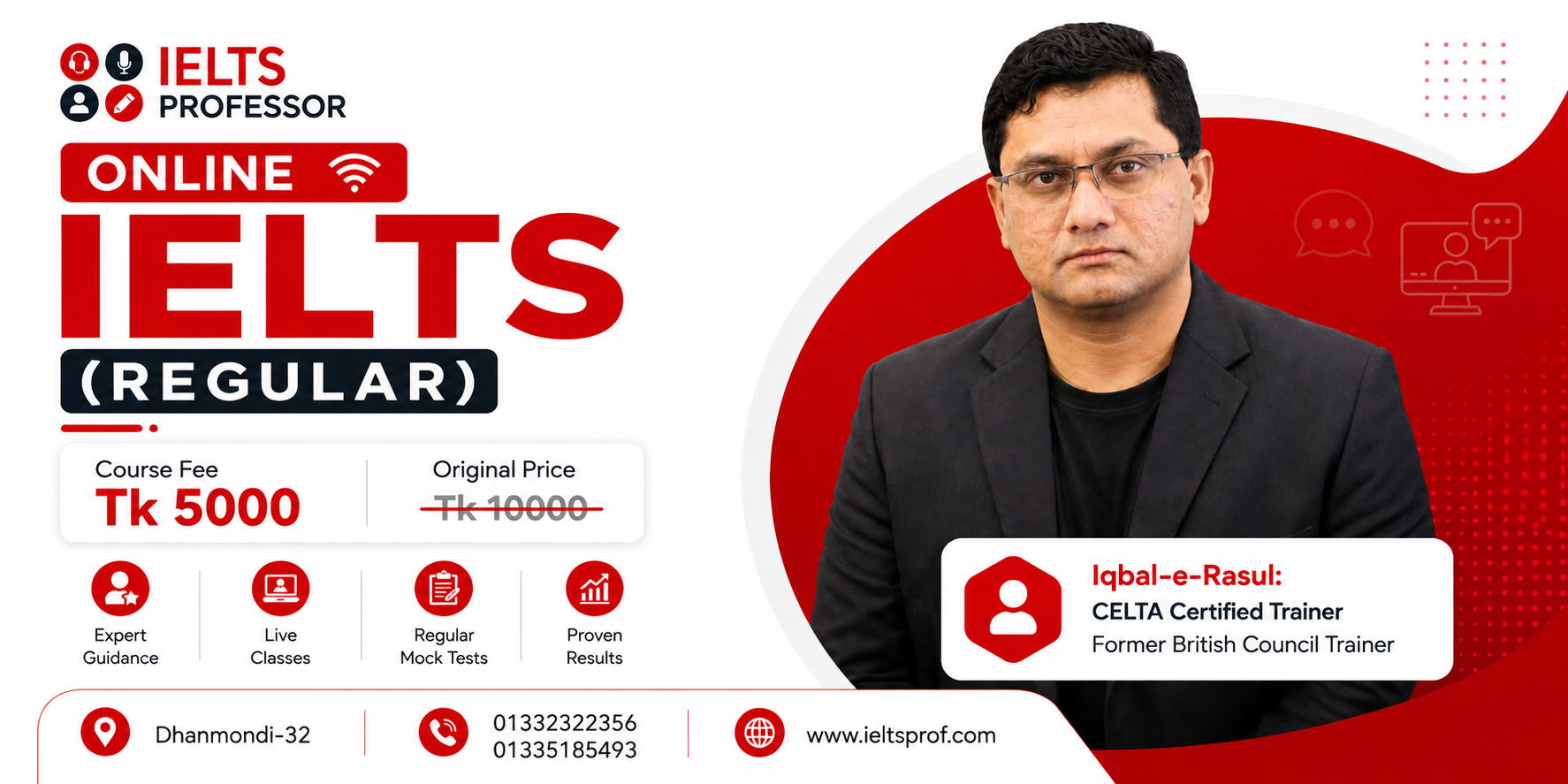
Online IELTS (Regular)
৳ 5000.00

Spoken English
৳ 3500.00
IELTS Regular Executive
৳ 8000.00
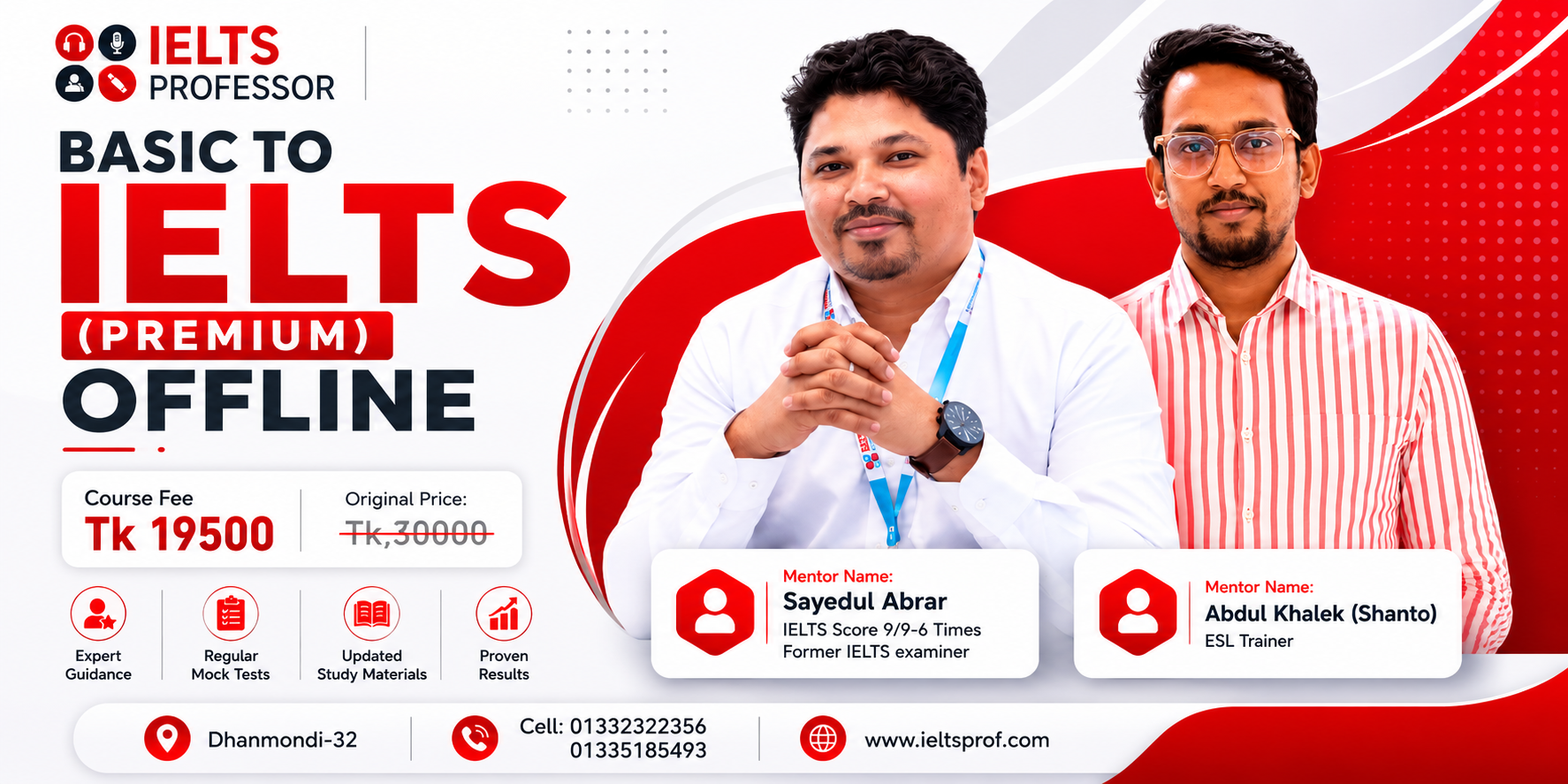
Basic to IELTS
৳ 19500.00
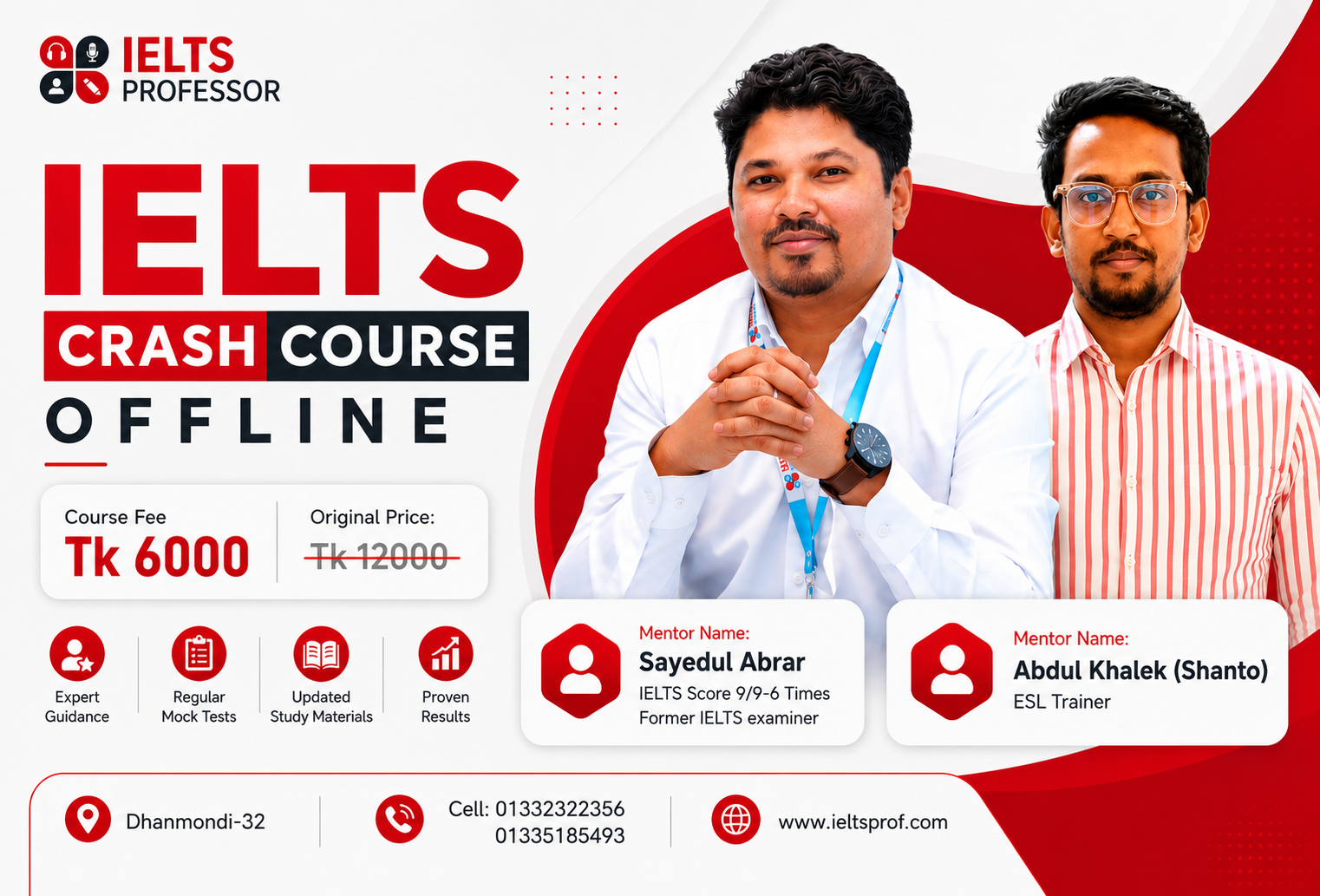
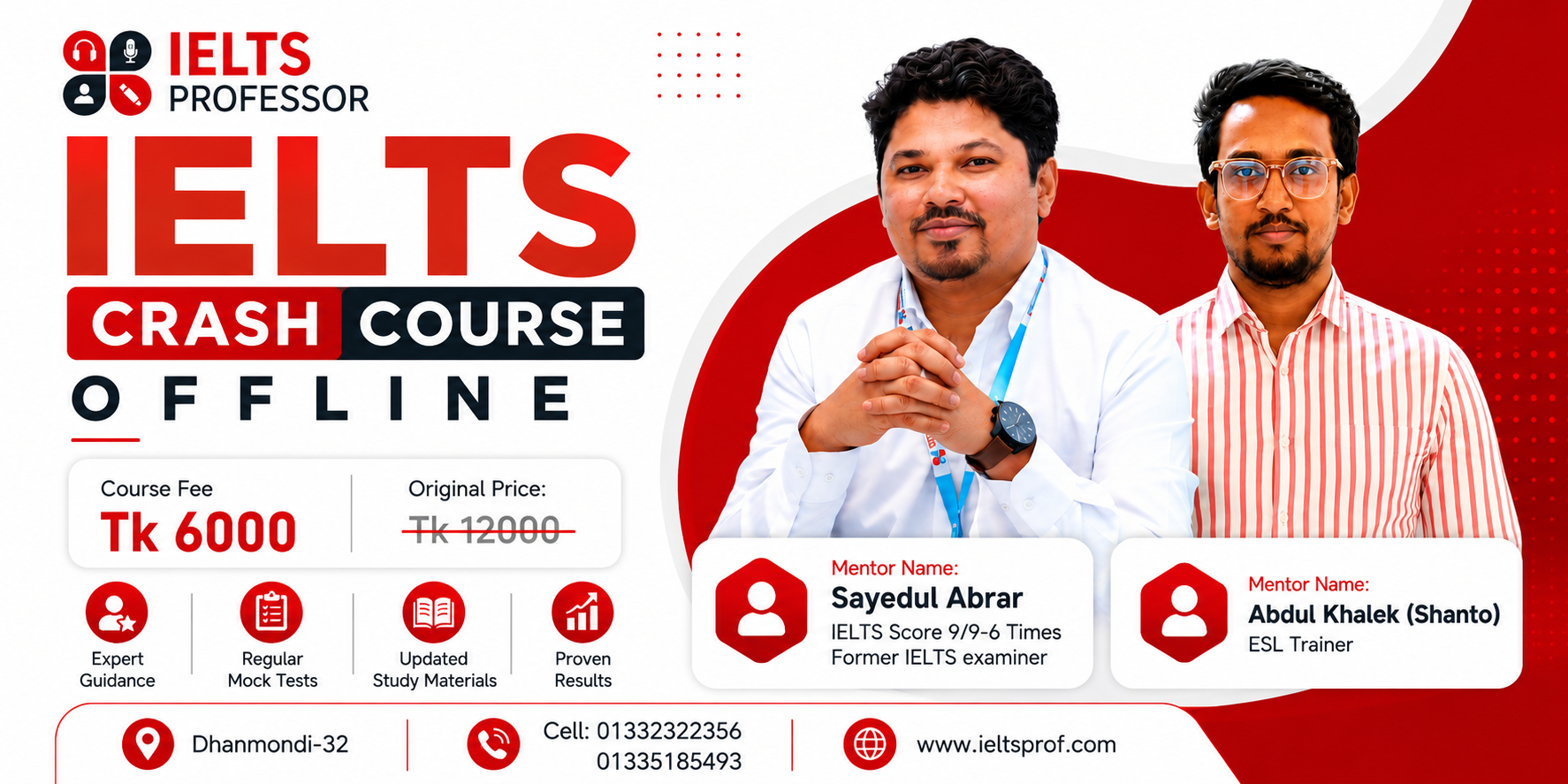
IELTS Crash Course
৳ 6000.00
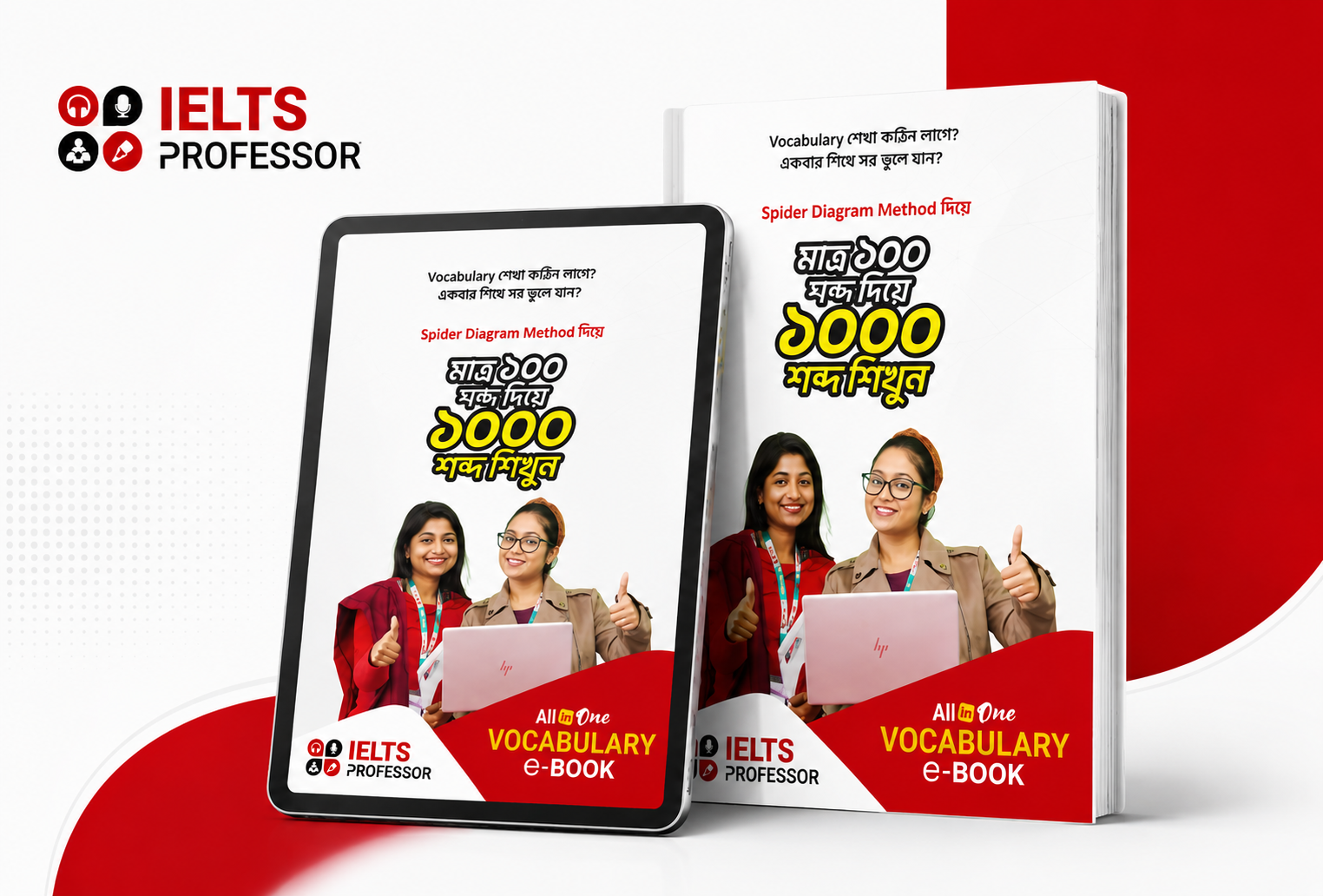
All in One Vocabulary
৳ 249.00

Premium 7+ IELTS Offline
৳ 14000.00