Call us:


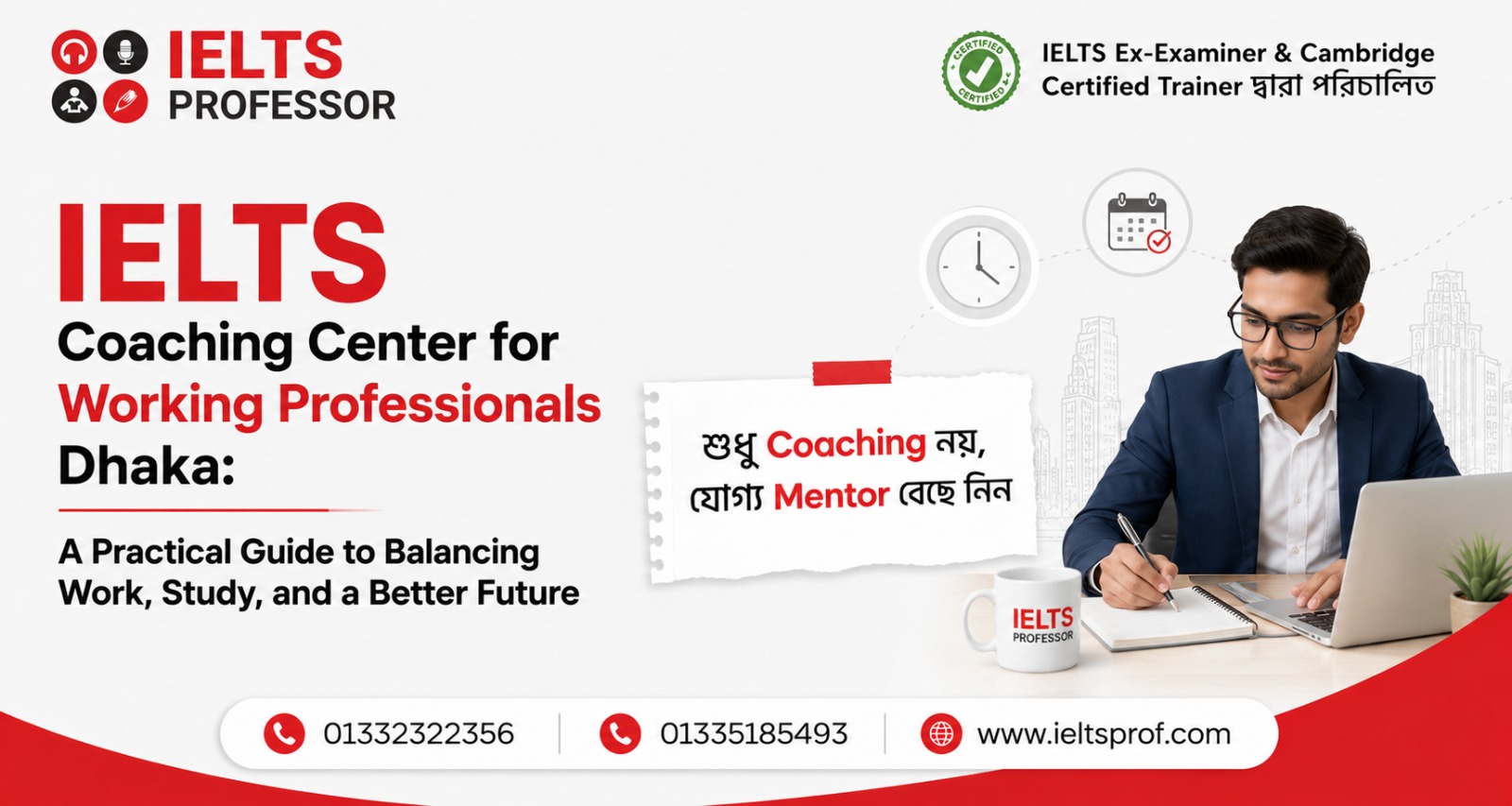
Finding the right IELTS coaching center for workingprofessionals Dhaka is not a simple matter of choosing the nearest
classroom. For an employed person, IELTS preparation is connected with time,
energy, money, family duties, career goals, and mental pressure. A university
student may have several free hours during the day. A working professional
often begins studying after spending eight or nine hours at an office, bank,
hospital, factory, school, or private company. By that time, the mind is tired,
traffic has consumed another part of the day, and family responsibilities are
waiting at home.
This is why IELTS preparation for professionals must follow a different model. A suitable program should provide evening or weekend classes, recorded support, flexible mock tests, personal feedback, and realistic study plans. It should not treat every learner as a full-time student. The central argument of this article is that professional candidates do not usually fail because they lack intelligence. Many struggle because their learning system does not fit their working life.
The need is serious. IELTS is accepted by more than 12,500
organisations around the world, and more than four million tests are taken
globally each year. For many Bangladeshi professionals, a strong IELTS score is
not only an exam result. It may open the door to postgraduate study,
professional registration, migration, international employment, or a new life
for the whole family.
Why Working Professionals Need a Different IELTS
Preparation System
A working professional has problems that are very different
from those of a regular student. The first problem is time. Office hours in
Dhaka are often followed by long traffic delays. A person who leaves the office
at 6:00 in the evening may not reach home before 8:00 or even later.
The second problem is mental energy. Listening to lectures
after a demanding workday can become difficult. The candidate may sit in class
physically but fail to absorb the lesson. The third problem is inconsistency.
Meetings, deadlines, business tours, family events, and health issues can
interrupt a normal study plan.
For these reasons, working professionals need:
- Evening,
weekend, or hybrid classes
- Short
and focused lessons
- Recorded
materials for missed sessions
- Individual
writing and speaking feedback
- Flexible
mock-test arrangements
- A
practical weekly study routine
- Support
for computer-delivered IELTS
- Clear
progress reports
The best IELTS coaching for professionals should not simply
provide more homework. It should provide the right homework. A candidate with
only one free hour should know exactly what to do during that hour.
IELTS Coaching Center for Working Professionals Dhaka and
the Reality of City Life
The title IELTS Coaching Center for Working Professionals
Dhaka represents a very specific need. Dhaka is full of ambitious people
who want to build international careers, but the city also places great
pressure on their time.
Consider the hypothetical case of Mahmud, a 31-year-old bank
officer in Motijheel. He wanted an overall band score of 7.0 for a postgraduate
program in Australia. He first joined a general IELTS batch that started at
5:00 in the afternoon. He missed almost half of the classes because his office
rarely allowed him to leave before 6:00.
Mahmud blamed himself. He thought he was lazy and weak in
English. In reality, the class schedule was unsuitable. After joining an
evening-focused program, he began attending three sessions a week. He used
recorded lessons when office meetings continued late. He practised writing
early on Friday mornings and speaking on Saturday evenings.
Within four months, his score improved from an estimated 5.5
to 7.0. The improvement did not come from studying all day. It came from
changing the system.
This example shows why professionals should judge a coaching
centre by more than its advertising. A famous name or crowded classroom does
not guarantee a suitable experience.
What Makes an IELTS Course Suitable for Working Adults?
A professional-friendly IELTS course should be designed
around adult learning. Adults learn best when they understand why a lesson is
useful and how it connects with their goal.
For example, a professional does not need to memorise
hundreds of difficult words without context. The candidate needs to know which
words can be used naturally in writing and speaking. In the same way, learning
grammar rules is not enough. The learner must understand how grammar affects
clarity, accuracy, and the band score.
A suitable course should offer the following features.
Flexible Class Timing
Evening classes should start late enough for office workers
to arrive. Weekend classes should also be available. A centre should have a
clear policy for missed classes.
Small or Controlled Batch Size
In a very large batch, speaking practice becomes limited.
Writing scripts may receive only general comments. Professionals need specific
feedback because they have little time for repeated mistakes.
Personal Study Planning
A teacher should help the candidate create a routine based
on office hours, travel time, family duties, and the target test date.
Regular Assessment
A diagnostic test should be conducted at the beginning.
Progress tests should follow during the course. Without assessment, candidates
may continue practising their strongest skills while ignoring their weakest
ones.
Real Feedback
Comments such as “improve grammar” or “write better ideas”
are not enough. Feedback should show the exact error, explain why it is a
problem, and demonstrate how to correct it.
How IELTS Professor in Dhanmondi Dhaka Can Fit into the
Search
Professionals living or working near Dhanmondi, Mohammadpur,
Kalabagan, Panthapath, Green Road, or nearby areas often search for a
convenient learning location. Long travel after office can reduce attendance
and motivation.
In this context, IELTS Professor in Dhanmondi Dhaka
may be considered by learners looking for specialised support in a central part
of the city. The value of any coaching provider, however, should be judged
through practical questions.
Before enrolling, ask:
- Are
evening or weekend classes available?
- How
many students are normally in one batch?
- Does
each writing task receive individual feedback?
- How
often are speaking mock tests conducted?
- Can
missed classes be recovered?
- Are
computer-based practice facilities available?
- Does
the teacher create a personal improvement plan?
- Are
mock tests held under real timing conditions?
A convenient location is important, but location alone is
not enough. The quality of instruction, feedback, scheduling, and assessment
should guide the final decision.
Understanding the Four Skills from a Professional’s
Viewpoint
IELTS tests Listening, Reading, Writing, and Speaking. Each
area creates a different challenge for working candidates.
Listening
Professionals often believe that watching English films will
automatically improve IELTS Listening. Films may help general understanding,
but IELTS requires focused listening under time pressure.
Candidates must recognise:
- Names
and numbers
- Changes
in a speaker’s decision
- Synonyms
and paraphrased information
- Directions
and locations
- Academic
explanations
- Different
English accents
A useful routine is to practise for 20 to 30 minutes during
a lunch break or commute. However, listening practice should only be done
during travel when it is safe and practical.
Reading
IELTS Reading is not only a test of English knowledge. It is
also a test of time control. Many professionals read every passage slowly
because they are afraid of missing information. This often leaves several
questions unanswered.
Candidates need to learn:
- Skimming
for the main idea
- Scanning
for specific details
- Recognising
paraphrases
- Managing
difficult questions
- Moving
forward when one answer takes too long
Reading one full test every night is not always realistic. A
better method may involve completing one passage carefully and reviewing every
mistake.
Writing
Writing is often the greatest barrier for Bangladeshi
candidates. Many understand the topic but cannot present ideas in a clear and
organised way. Others try to impress the examiner with difficult vocabulary.
This can lead to unnatural sentences and grammar mistakes.
A professional candidate should learn how to:
- Answer
every part of the question
- Organise
ideas into clear paragraphs
- Support
claims with relevant examples
- Use
linking words naturally
- Write
accurate sentences
- Review
work within the time limit
Writing improvement requires correction. Producing ten
essays without feedback may repeat the same problems ten times.
Speaking
Many employed candidates use English in emails but rarely
speak it. Some feel uncomfortable because they are afraid of making mistakes in
front of others. Cultural habits can also create problems. Bangladeshi learners
may provide very short answers because they believe long answers sound proud or
unnecessary.
IELTS Speaking rewards relevant development. Candidates
should explain answers with reasons, experiences, comparisons, or examples.
They do not need to copy a foreign accent. Clear and natural communication
matters more.
A Realistic Weekly Plan for Busy Professionals
The idea behind IELTS Coaching Center for Working
Professionals Dhaka is not that candidates must study for five hours every
day. A realistic plan can produce better results than an extreme routine that
lasts only one week.
A sample schedule may look like this:
Sunday
Complete 30 minutes of Listening practice after dinner.
Review incorrect answers for another 15 minutes.
Monday
Read one passage under timed conditions. Record new
paraphrases rather than memorising random words.
Tuesday
Attend an evening class or watch a recorded lesson. Complete
one short writing exercise.
Wednesday
Practise speaking for 20 minutes. Record answers on a phone
and listen for pauses, repetition, and unclear sentences.
Thursday
Write one Task 1 or General Training letter. Review the
structure and grammar.
Friday
Complete a full Writing test in the morning. Attend a
feedback session or speaking mock later in the day.
Saturday
Take a full mock test or review the week’s mistakes. Prepare
the plan for the next week.
This routine requires discipline, but it does not require
the candidate to leave employment or ignore family life.
The Story of Farzana: Preparing While Managing a Family
Farzana was a 34-year-old schoolteacher from Mirpur. She
wanted to apply for a master’s degree in education. She had a full-time job and
two young children. Her first attempt at IELTS preparation failed because she
tried to study from 11:00 at night until 2:00 in the morning.
After ten days, she was exhausted. She stopped studying and
felt guilty.
Later, she created a more humane routine. She woke up 40
minutes earlier on three weekdays. She used that time for Reading and
vocabulary. Her husband supported her by managing the children during a weekend
mock test. She also informed her school supervisor about her study goal and
requested one afternoon of leave before the examination.
Her first mock result was 5.5 in Writing. Instead of writing
more essays, she studied her errors. She noticed that she often wrote long
sentences with several unrelated ideas. Her teacher asked her to use shorter
and clearer structures. After regular correction, she achieved 6.5 in Writing
and an overall score of 7.0.
Farzana’s story teaches an important lesson. Support,
planning, and feedback are not signs of weakness. They are part of successful
preparation.
Financial Challenges for Bangladeshi Professionals
The financial cost of IELTS can be difficult for many
families. As of July 2026, the standard IELTS Academic and General Training
test fee in Bangladesh is BDT 29,600. Coaching fees, books, transport, internet
packages, and application expenses can increase the total cost.
A candidate should therefore avoid booking the examination
too early. Registering before reaching a stable mock-test score can create
pressure and lead to another costly attempt.
A practical financial plan may include:
- Setting
aside a fixed amount each month
- Comparing
course features rather than choosing by price alone
- Using
official free practice materials
- Borrowing
books instead of purchasing many guides
- Taking
mock tests before paying the exam fee
- Choosing
a centre near home or office to reduce travel costs
- Avoiding
unnecessary private lessons unless a specific weakness exists
The cheapest coaching option may become expensive if it
provides weak feedback and causes repeated test attempts. At the same time, the
most expensive course is not automatically the best. Value should be measured
by teaching quality and measurable progress.
Cultural and Emotional Challenges
IELTS preparation is also an emotional journey. Some
professionals have not taken a formal examination for ten or fifteen years.
Returning to a classroom can feel uncomfortable. A senior manager may feel
embarrassed when a younger teacher corrects basic grammar. A parent may feel
guilty about spending time on personal study.
Family expectations can add pressure. Relatives may
repeatedly ask about the test date, band score, visa result, or departure plan.
Some candidates compare themselves with friends who achieved high scores
quickly.
These pressures can damage concentration.
Candidates should remember that English ability develops at
different speeds. A person who uses English daily at work may need less
preparation than someone who works mainly in Bangla. This does not mean one
person is more intelligent.
A supportive IELTS coaching environment should allow
learners to make mistakes without humiliation. Teachers should correct firmly
but respectfully. Candidates should also protect their study goals from
unnecessary social discussion.
Computer-Delivered IELTS and the Need for Digital
Practice
Bangladesh has moved away from the traditional paper-based
IELTS format. Professionals now need to prepare for the computer-delivered
experience.
This change offers useful benefits. Computer-based tests
usually provide more date options and faster results. However, candidates must
be comfortable with typing, scrolling, highlighting, and managing time on a
screen.
Before booking the test, practise:
- Typing
without looking at the keyboard too often
- Writing
at least 250 words within the Task 2 time limit
- Editing
sentences quickly
- Reading
long passages on a screen
- Using
headphones while maintaining concentration
- Moving
between questions efficiently
- Checking
spelling on the screen without digital correction tools
A strong writer may still face difficulty if typing is slow.
This is why an IELTS coaching center for working professionals Dhaka
should include computer-based practice rather than depending only on printed
books.
How Long Should a Working Professional Prepare?
There is no single answer. Preparation time depends on the
candidate’s current level, target score, available hours, and weakest skill.
A candidate already performing at band 6.5 may need eight to
twelve focused weeks to reach 7.0. Someone starting near band 5.0 may need
several months. A person seeking 8.0 in every skill may require a longer and
more specialised process.
The first step should be a full diagnostic test. The result
should then be analysed skill by skill. An overall score can hide serious
weaknesses. For example, a candidate may have 7.5 in Listening but only 5.5 in
Writing.
Do not choose an examination date because a friend is taking
the test. Choose it when your performance has become stable across several mock
tests.
Common Mistakes Made by Employed Candidates
Working professionals often make predictable mistakes.
The first is collecting too many resources. They download
hundreds of PDFs, videos, applications, and vocabulary lists. This creates
confusion rather than progress.
The second is studying only during weekends. A six-hour
Friday session cannot fully replace short and regular weekday practice.
The third is avoiding feedback. Some candidates continue
writing alone because they are afraid of criticism.
The fourth is memorising speaking answers. Examiners can
recognise unnatural, prepared responses. Memorisation may also create panic
when the real question is slightly different.
The fifth is booking the test based on emotion. A candidate
may register after one good mock result, even though other scores remain
unstable.
The solution is simple: use fewer materials, practise
regularly, receive correction, and measure progress honestly.
How to Evaluate Progress Before the Real Test
A professional-friendly course should provide evidence of
improvement. Feeling confident is useful, but performance data is more
reliable.
Track the following:
- Listening
and Reading raw scores
- Writing
band estimates by criterion
- Speaking
fluency and accuracy
- Number
of repeated grammar mistakes
- Time
required for each task
- Typing
speed and editing ability
- Performance
across full mock tests
Keep a mistake notebook. Divide it into grammar, vocabulary,
reading traps, listening errors, and speaking issues. Review it every week.
A candidate is usually closer to test readiness when the
target score appears repeatedly, not only once.
Choosing the Right IELTS Coaching Center for Working
Professionals Dhaka
The title IELTS Coaching Center for Working Professionals
Dhaka should mean more than an evening timetable. A true
professional-focused centre must understand the candidate’s complete situation.
During a counselling session, notice whether the
representative asks about your present level, target band, work schedule, and
deadline. Be careful when a centre promises a guaranteed high score without
assessment.
Attend a trial class when possible. Observe whether the
teacher explains ideas clearly. Check whether students are encouraged to speak.
Ask to see a sample of writing feedback.
Also consider the travel route. A two-hour journey for a
one-hour class may not be sustainable. Professionals near Dhanmondi may explore
IELTS Professor in Dhanmondi Dhaka as part of their comparison, but they
should still examine class timing, teaching quality, feedback, and flexibility
before making a decision.
The right centre should make preparation more organised, not
more stressful.
Building a Sustainable Mindset
Success in IELTS rarely comes from motivation alone.
Motivation changes from day to day. A system is more dependable.
Prepare study materials before the week begins. Fix specific
practice times. Inform family members about important mock-test sessions. Keep
the mobile phone away during focused study. Reward small progress, such as
improving a Reading score or completing a full essay on time.
Do not wait for a perfect day. A professional life will
always contain urgent tasks. The goal is to continue even when the routine
becomes imperfect.
The deeper meaning of IELTS Coaching Center for Working
Professionals Dhaka is therefore connected with sustainable learning. The
centre and candidate must work together to build a plan that can survive office
deadlines, family events, traffic, and tiredness.
Summary
Choosing an IELTS coaching center for working
professionals Dhaka requires careful attention to timing, feedback,
teaching quality, computer practice, location, and personal support. Working
candidates should follow realistic routines instead of extreme study plans.
Financial pressure, family duties, traffic, and cultural hesitation can be
managed through planning and honest assessment. Professionals near Dhanmondi
may also examine IELTS Professor in Dhanmondi Dhaka while comparing
available options. The best preparation system is one that fits real life and
produces steady, measurable improvement.
Frequently Asked Questions
1. Can I prepare for IELTS while doing a full-time job?
Yes, many working professionals prepare successfully without
leaving their jobs. The key is to use a realistic schedule instead of copying
the routine of a full-time student. Study for 30 to 60 minutes on selected
weekdays and reserve a longer period for the weekend. Divide the four skills
across different days so that the workload remains manageable. Use recorded
lessons when office responsibilities prevent class attendance. Regular practice
for three months is usually more effective than irregular long sessions.
2. How many hours should a working professional study
each day?
Most professionals can begin with 45 to 90 minutes of
focused study on working days. The quality of concentration matters more than
the number of hours. One day may be used for Listening, while another may focus
on Reading or Writing. A longer mock test can be completed during the weekend.
Candidates with a lower starting level may need a longer preparation period
rather than extremely long daily sessions. The routine should be demanding
enough to create progress but realistic enough to continue.
3. Should I choose an evening batch or a weekend batch?
Choose the batch that you can attend regularly without
damaging your health or employment. An evening batch is useful when your office
ends at a fixed time and the centre is nearby. A weekend batch may be better
when office hours are unpredictable. Some candidates benefit from a hybrid plan
with one evening class and one weekend session. Consider travel time because
Dhaka traffic can turn a short class into a long commitment. Ask whether missed
sessions can be recovered before paying the course fee.
4. How can I study after a tiring office day?
Do not begin every evening with the most difficult task.
Start with a short activity such as reviewing vocabulary, listening to one
section, or correcting an old essay. Keep study materials prepared so that you
do not waste time deciding what to do. Take a short break, eat something light,
and remove phone distractions. Use early mornings for difficult tasks when
evening study repeatedly fails. Most importantly, do not treat one missed day
as the end of the entire plan.
5. Is online IELTS coaching suitable for professionals?
Online coaching can be very useful because it removes travel
time and offers more flexibility. However, candidates should check whether the
course includes live interaction, writing correction, speaking practice, and
mock tests. Watching recorded videos alone is not complete coaching. The
learner must receive feedback and have opportunities to ask questions. A stable
internet connection and a quiet study space are also important. Hybrid coaching
may offer a useful balance between flexibility and personal support.
6. How do I know whether an IELTS coaching centre is
reliable?
A reliable centre should begin with a level assessment and
discuss your target score honestly. It should explain the course plan, class
size, teacher access, mock tests, and feedback process clearly. Ask to see an
example of corrected writing rather than depending only on promotional claims.
Speak with current or former learners when possible. Avoid centres that
guarantee a particular band without knowing your present ability. Reliable
coaching gives a method and support, but the candidate must still complete the
required work.
7. How much does IELTS preparation cost in Bangladesh?
The total cost depends on the coaching format, course
duration, transport, study materials, internet use, and test fee. The standard
IELTS Academic and General Training test fee in Bangladesh is BDT 29,600 as of
July 2026. Coaching fees vary widely, so candidates should compare the services
included in each package. A lower course fee may not include writing correction
or mock tests. Prepare a complete budget before starting and keep an emergency
amount for application-related expenses. Avoid booking the real test before
your scores become stable.
8. Can I achieve band 7 with weak grammar?
It is possible to reach band 7 after improving the grammar
problems that repeatedly reduce clarity. You do not need to use extremely
complicated sentences in every answer. You need a useful range of sentence
structures with good control and accuracy. Begin by identifying your common
mistakes, such as subject-verb disagreement, articles, tense changes, and
sentence fragments. Correct these errors through short exercises and guided
writing. Regular feedback is essential because many candidates cannot identify
all their own mistakes.
9. How can I improve Writing when I have limited time?
Focus on quality rather than producing a large number of
essays. Write one complete task, receive detailed feedback, and rewrite the
same task after studying the corrections. Learn how to analyse questions before
writing. Build clear paragraph structures and practise developing one main idea
with explanation and example. Keep a list of your repeated grammar and
vocabulary mistakes. Timed writing should begin after you understand the basic
method, not before.
10. How can I practise Speaking without a partner?
Record your answers on a phone and listen to them carefully.
Notice long pauses, repeated words, unclear pronunciation, and answers that are
too short. Practise common topics, but do not memorise complete scripts. Use a
simple structure: give the answer, explain the reason, and add an example. You
may also describe your daily work, office responsibilities, or recent
experiences in English. A teacher or speaking partner should still evaluate you
regularly because self-review has limits.
11. Should I book IELTS before completing my preparation?
Booking early can create motivation, but it can also produce
unnecessary financial and emotional pressure. Take several full mock tests
before selecting the examination date. Your score should be close to the target
across different tests, not only in one successful attempt. Pay special
attention to Writing and Speaking because self-scoring these skills is
difficult. Consider office deadlines, family events, and possible travel before
choosing the date. Book only when your preparation and personal schedule are
reasonably stable.
12. Is computer-delivered IELTS difficult for older
professionals?
It is not necessarily difficult, but unfamiliar candidates
need regular practice. Learn to type accurately, scroll through Reading
passages, use headphones, and edit Writing answers on screen. Complete full
tests on a computer rather than using printed materials only. Slow typing can
reduce planning and checking time, so practise a little every day. The test
content and scoring standards remain the same. Comfort with the test interface
can reduce anxiety and improve time management.
13. What should I do when office work interrupts my study
plan?
First, accept that interruption is a normal part of
professional life. Keep a minimum study target, such as 20 minutes, for
unusually busy days. Move major tasks to another day instead of cancelling the
whole week. Use recorded classes and short practice activities when overtime
becomes necessary. Review your routine every weekend and adjust it according to
the coming workload. A flexible plan is stronger than a perfect plan that
collapses after one unexpected meeting.
14. Is IELTS Professor in Dhanmondi Dhaka suitable for
working professionals?
Professionals near Dhanmondi may consider IELTS Professor
in Dhanmondi Dhaka because location can strongly affect regular attendance.
However, suitability should be judged through class timing, batch size,
feedback quality, mock-test frequency, and support for missed lessons.
Candidates should discuss their office schedule before enrolling. They should
also ask whether computer-based practice and individual writing correction are
included. A trial class or counselling session can provide useful insight. The
final choice should match both the learner’s academic needs and daily routine.
15. What is the most important advice for a busy IELTS
candidate?
Do not try to copy someone else’s preparation journey. Begin
with a diagnostic test and understand your own strengths and weaknesses. Build
a weekly routine that fits your job, travel, family, and energy level. Use a
small number of reliable materials and obtain regular feedback. Measure
progress through mock tests and an error notebook. Consistent, focused
preparation is more valuable than occasional periods of extreme study.
Final Thoughts
The search for an IELTS Coaching Center for Working
Professionals Dhaka is ultimately a search for balance. Working candidates
need serious teaching, but they also need understanding. They need discipline,
but they should not destroy their health or family life to prepare for one
examination.
A good course will respect the learner’s professional
reality while maintaining academic standards. It will show the shortest
responsible path from the present level to the target score. With realistic
planning, detailed correction, computer-based practice, and steady effort, a
busy Bangladeshi professional can prepare effectively and move closer to
international study, migration, or career goals.
Find Your Courses

IELTS A to Z
৳ 1990.00

7+ IELTS Offline Regular
৳ 8000.00

Online IELTS (Regular)
৳ 5000.00

Spoken English
৳ 3500.00

IELTS Regular Executive
৳ 8000.00

Basic to IELTS
৳ 19500.00
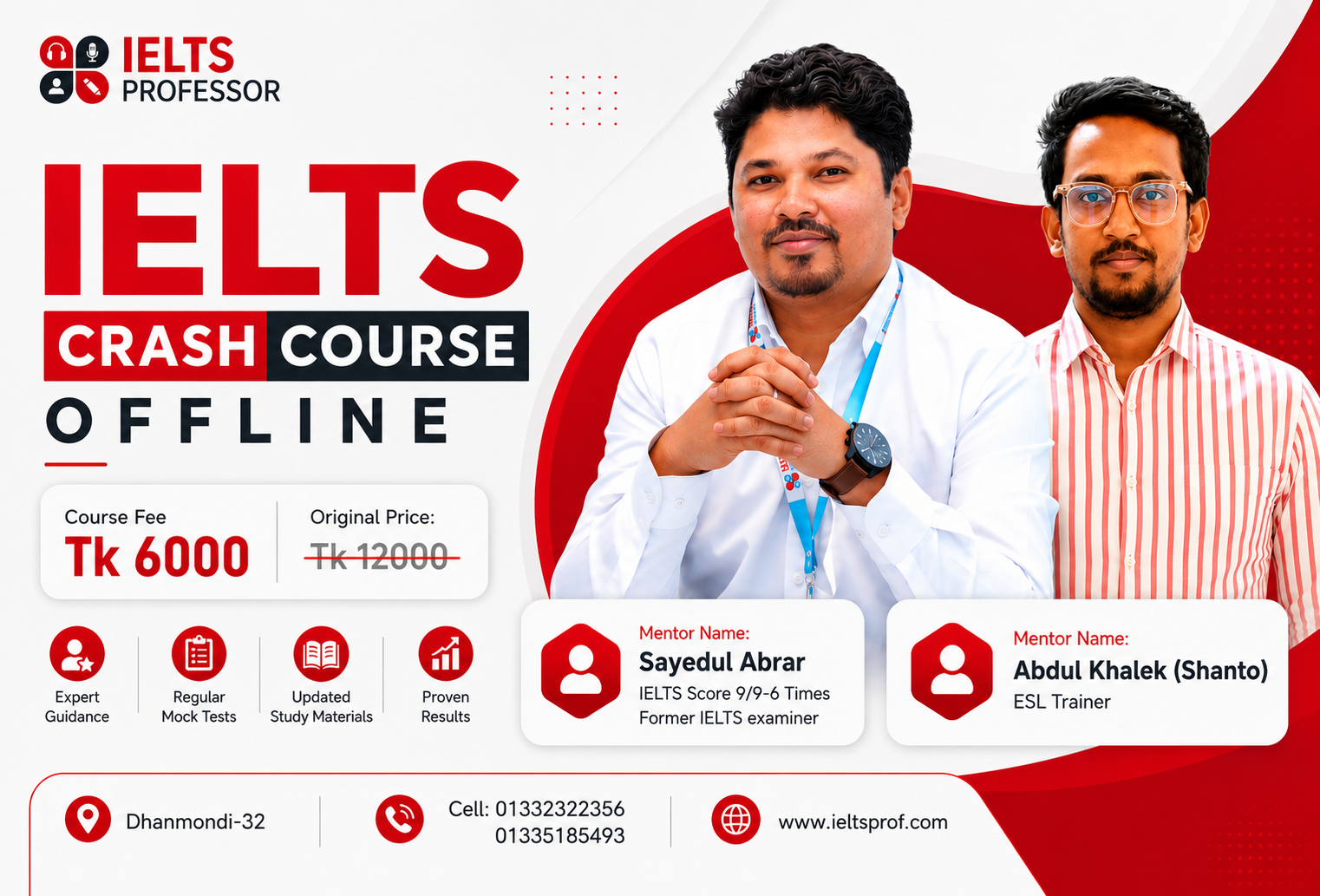
IELTS Crash Course
৳ 6000.00
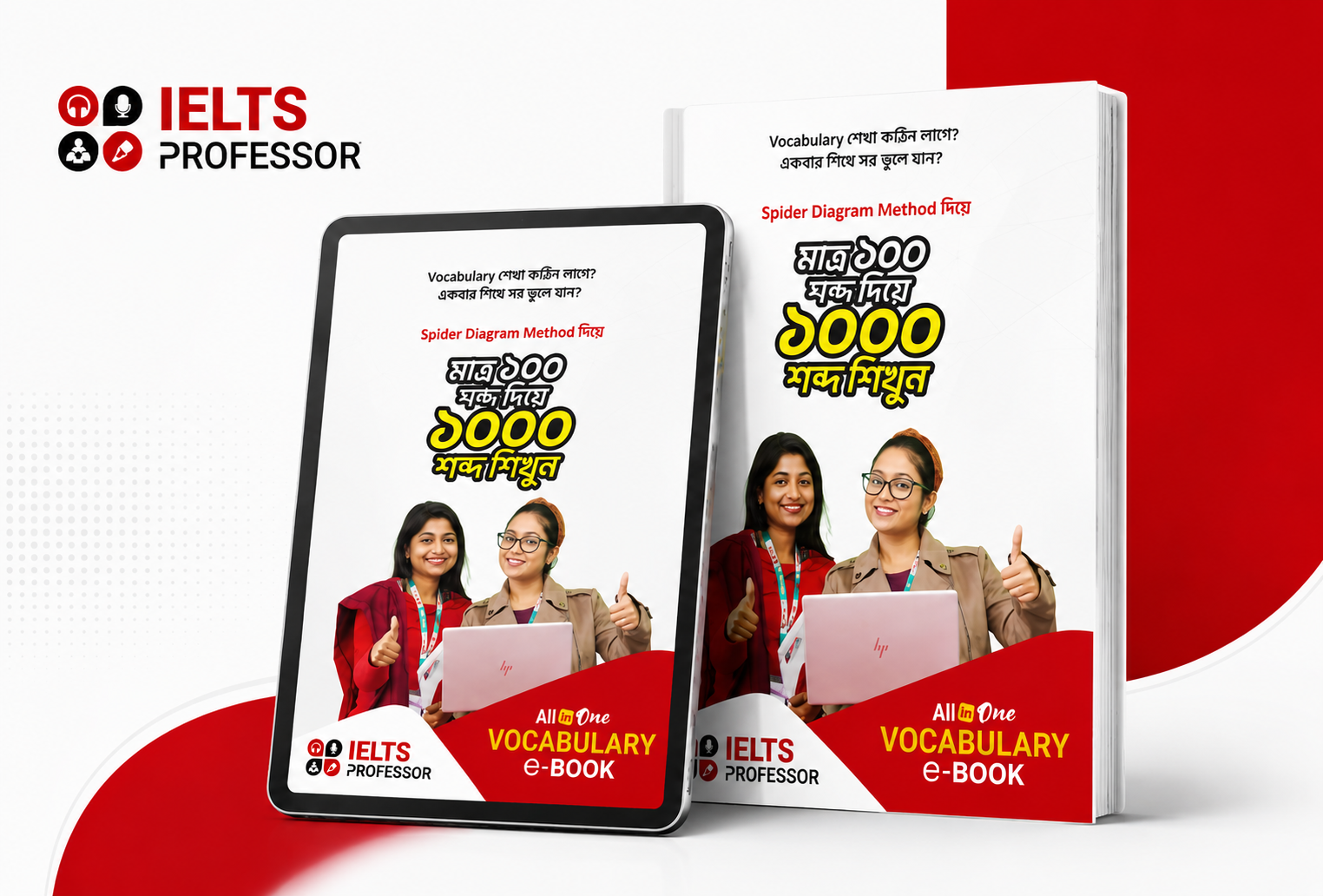
All in One Vocabulary
৳ 200.00

Premium 7+ IELTS Offline
৳ 14000.00