Call us:


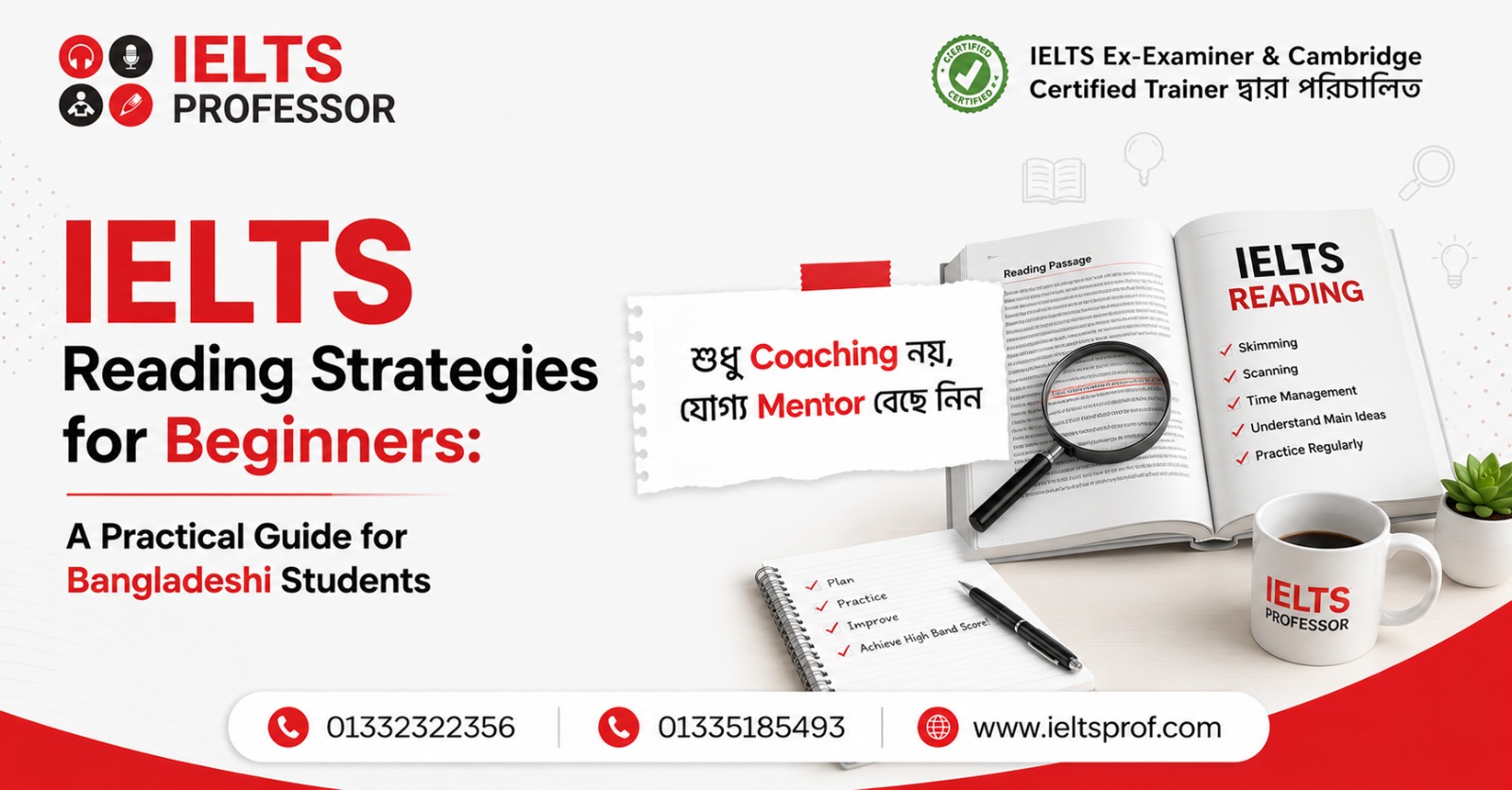
IELTS Reading can feel frightening when a student begins
preparation for the first time. A learner may open a practice book, see three
long passages, notice many unfamiliar words, and immediately think that success
is impossible. This fear is especially common among Bangladeshi students who
have studied English mainly through grammar rules, textbook questions, and
memorised answers. They may know many rules but still struggle to understand a
long passage within a limited time. This is why learning IELTS reading
strategies for beginners is more important than trying to memorise
thousands of difficult words.
The central argument of this article is simple. IELTS
Reading is not only a test of English vocabulary. It is also a test of time
control, information finding, careful decision-making, and emotional
discipline. A beginner who understands the test pattern and practises the right
method can often improve faster than a student who only reads difficult books
without a clear purpose.
The IELTS Reading test contains 40 questions and must be
completed in 60 minutes. Academic Reading includes three long passages, while
General Training Reading uses several texts across three sections. There is no
extra time for transferring Reading answers, and spelling mistakes can cause a
student to lose marks.
Therefore, IELTS Reading Strategies for Beginners focuses on practical action. It
explains how to skim, scan, recognise paraphrases, control time, handle
difficult vocabulary, avoid common traps, and develop confidence without
spending an unreasonable amount of money. It also discusses the real challenges
faced by students in Dhaka and other parts of Bangladesh, including limited
resources, crowded living conditions, weak reading habits, computer anxiety,
financial pressure, and differences between local education and international
testing systems.
Why IELTS Reading Feels Difficult at the Beginning
Many beginners believe that every word in a passage must be
understood. This belief creates the first major problem. When students stop at
every unknown word, they lose time, forget the main idea, and become mentally
tired.
Consider the story of Rafi, a hypothetical student from
Mirpur. He completed his undergraduate degree in business studies and planned
to apply for a master’s programme abroad. During his first IELTS Reading
practice test, he spent almost 35 minutes on Passage 1. He tried to translate
every sentence into Bangla. When he reached Passage 3, only eight minutes
remained.
Rafi’s problem was not a complete lack of English knowledge.
His problem was his reading method.
The test does not require candidates to translate each line.
It requires them to find information, understand arguments, identify opinions,
recognise relationships, and select accurate answers. Official IELTS materials
describe Reading as an assessment of skills such as understanding main ideas,
identifying details, following arguments, and recognising writers’ views.
Beginners commonly face five difficulties:
- Long
passages create fear before reading begins.
- Unknown
words interrupt concentration.
- Similar
answer choices create confusion.
- Weak
time management leaves questions unanswered.
- Paraphrased
information is difficult to recognise.
These problems are connected. A student who fears unknown
words reads slowly. Slow reading causes time pressure. Time pressure leads to
careless answers. Careless answers lower the score and damage confidence.
The solution is not to “read faster” without understanding.
The solution is to read with a clear purpose.
Understand the Test Before Trying to Beat It
A beginner should first understand what happens during the
Reading test.
Both Academic and General Training Reading contain 40
questions and allow 60 minutes. Academic Reading usually contains three longer
texts taken from sources such as books, journals, magazines, newspapers, and
online materials. General Training Reading contains texts connected with daily
life, work, public information, and general interests.
Common question types include:
- Multiple-choice
questions
- True,
False, Not Given
- Yes,
No, Not Given
- Matching
headings
- Matching
information
- Matching
features
- Sentence
completion
- Summary
completion
- Note
or table completion
- Diagram
labelling
- Short-answer
questions
Each question type tests a slightly different reading skill.
Therefore, one single method cannot solve every question.
For example, scanning can help you locate a date or name.
However, scanning alone may not solve a matching-heading question because that
task requires understanding the central idea of a paragraph. Similarly, reading
one sentence may help with sentence completion, but it may not be enough for a
writer’s opinion question.
This is a central lesson in IELTS Reading Strategies for
Beginners: A Practical Guide for Bangladeshi Students. A learner must
connect each question type with the correct reading technique.
The Difference Between Skimming and Scanning
Beginners often hear the words “skimming” and “scanning,”
but many do not know how they differ.
Skimming
Skimming means reading quickly to understand the general
idea. You are not searching for one specific detail. You are trying to
understand what the passage or paragraph is mainly about.
While skimming, pay attention to:
- The
title
- The
first sentence of each paragraph
- The
final sentence of a paragraph
- Repeated
words or ideas
- Names,
dates, and technical terms
- Contrast
words such as however, although, and but
Suppose a paragraph begins by describing the early use of
solar energy, discusses later technological development, and ends by mentioning
modern solar farms. The main idea is probably the historical development of
solar power.
You do not need to memorise every example.
Scanning
Scanning means moving your eyes through a passage to find
specific information. You may look for a name, year, percentage, location,
scientific term, or keyword.
Imagine that a question asks:
“In which year was the research centre established?”
You should scan for years rather than carefully reading the
entire passage from the beginning.
Skimming gives you a map. Scanning helps you find an exact
address on that map.
A useful beginner routine is:
- Read
the title.
- Skim
each paragraph.
- Identify
the question type.
- Underline
keywords in the question.
- Scan
the passage for related information.
- Read
the surrounding sentences carefully.
- Confirm
the answer before moving on.
Learn to Recognise Paraphrasing
Paraphrasing is one of the most important parts of IELTS
Reading. The question usually does not repeat the exact wording of the passage.
Instead, it expresses the same idea using different words.
For example:
Passage: “The number of city residents increased rapidly.”
Question: “There was a sharp rise in the urban population.”
The meaning is almost the same, but the words are different.
Common paraphrase relationships include:
- Increase
and rise
- Decrease
and decline
- Important
and significant
- Cheap
and inexpensive
- Difficult
and challenging
- Cause
and lead to
- Because
of and due to
- People
living in cities and urban residents
- Young
people and the younger generation
- Change
and transformation
Do not depend only on matching identical words. Exact
keyword matching can lead you to the wrong location because the test may repeat
the same word in an unrelated paragraph.
A better method is to underline meaning groups.
For example, in the question “The new policy reduced the
cost of transportation,” the meaning groups are:
- New
policy
- Reduced
- Cost
- Transportation
In the passage, these may appear as:
- Recently
introduced regulation
- Lowered
- Expense
- Travel
A student who searches only for “transportation” may miss
the answer. A student who searches for the complete idea has a better chance.
Build Vocabulary Without Trying to Memorise a Dictionary
Vocabulary matters, but vocabulary learning must be
realistic.
Many Bangladeshi learners buy large vocabulary books and try
to memorise 50 or 100 words every day. After one week, they forget most of
them. This happens because the words have no meaningful context.
A better approach is to learn words through reading
passages.
Create a vocabulary notebook with five columns:
- New
word
- Meaning
in simple English
- Bangla
meaning if necessary
- Sentence
from the passage
- One
personal sentence
Suppose you find the word “decline.”
You may record:
Decline
To become smaller or lower
হ্রাস পাওয়া
“The population of the species declined.”
“My concentration declines when I study without sleep.”
Also record word families:
- Analyse
- Analysis
- Analytical
- Analyst
IELTS passages often change the grammatical form of a word.
Understanding word families makes paraphrasing easier.
Focus particularly on:
- Cause-and-effect
words
- Comparison
words
- Academic
verbs
- Opinion
words
- Words
showing uncertainty
- Words
showing quantity
- Positive
and negative descriptions
Ten well-understood words are more valuable than fifty
memorised words that you cannot recognise in a sentence.
Master True, False, Not Given Questions
This question type causes serious confusion among beginners.
The rules are:
- True
means the statement agrees with the passage.
- False
means the statement contradicts the passage.
- Not
Given means the passage does not provide enough information.
The biggest mistake is using personal knowledge.
Suppose the passage says:
“Some students prefer online learning.”
Question:
“All students prefer online learning.”
The answer is False because “some” and “all” have different
meanings.
Now consider:
“Online learners usually study at night.”
If the passage does not mention when they study, the answer
is Not Given. It does not matter whether studying at night sounds logical.
Follow this process:
- Find
the relevant part of the passage.
- Compare
the statement with the passage.
- Look
for agreement or contradiction.
- Choose
Not Given when the required information is absent.
- Never
add your own assumptions.
Be careful with words such as:
- All
- Some
- Only
- Always
- Usually
- Never
- Mainly
- Must
- May
- More
- Less
These small words can completely change the answer.
Handle Matching Headings Through Main Ideas
Matching headings should not be solved by matching one
repeated word.
A heading must represent the main purpose of the whole
paragraph.
Suppose a paragraph mentions rainfall in the first sentence,
farming in the middle, and food shortages at the end. The paragraph may not
simply be about rainfall. Its true focus may be the effect of changing rainfall
on food production.
Use this method:
- Read
all headings quickly.
- Underline
the central idea of each heading.
- Read
the first two sentences of the paragraph.
- Notice
examples, contrasts, and conclusions.
- Write
a short three-to-five-word summary.
- Select
the heading closest to your summary.
For example:
Your paragraph summary: “Reasons bees are disappearing.”
Possible heading: “Factors behind the decline of bee
populations.”
That is a strong match even though the wording is different.
Do not spend too long choosing between two headings. Mark
the uncertain item, continue, and return later. Another paragraph may make the
correct choice clearer.
Use a Practical Time Management Plan
There are 40 questions in 60 minutes, so a candidate has an
average of about 90 seconds per question. However, some questions require less
time, while others require more.
A common timing plan is:
- Passage
1: 17 minutes
- Passage
2: 20 minutes
- Passage
3: 23 minutes
Another simple plan is to allow about 20 minutes for each
passage. IELTS preparation guidance commonly encourages students to control
time across the three sections rather than allowing one passage to consume the
full hour.
Beginners may need a flexible approach. Passage 1 is often
more approachable, so completing it quickly can create extra time for Passage
3.
Use the two-minute rule. When one question has taken about
two minutes without progress:
- Mark
it.
- Make
a temporary choice if appropriate.
- Move
to the next question.
- Return
after finishing easier items.
Do not sacrifice five easy answers to solve one difficult
question.
This principle helped Nusrat, a hypothetical applicant from
Chattogram. At first, she spent four or five minutes on every confusing
question. Her practice score remained low because she regularly left the final
six questions unanswered.
She later adopted a strict time plan. She moved forward
whenever she became stuck and returned during the final minutes. Her accuracy
did not become perfect overnight, but she began attempting all 40 questions.
Her improvement came from better decision-making, not from suddenly learning
every English word.
Read the Questions Before Reading Deeply
For many question types, reading the questions first gives
the brain a purpose.
Before searching the passage:
- Identify
names, dates, places, and numbers.
- Underline
important nouns and verbs.
- Notice
word limits.
- Predict
the type of answer required.
- Check
whether answers are likely to appear in order.
For sentence completion, grammar can help you predict the
answer.
Example:
“The researchers collected data from several ______.”
The blank probably needs a plural noun.
For a question asking “When,” you should expect a time or
date. For “Why,” you should look for a reason. For “Who,” you should search for
a person or group.
However, reading the questions first does not mean reading
every option in great detail before touching the passage. For a long matching
task, that may overload your memory. Read enough to understand the task, then
move between the questions and text strategically.
Follow Word-Limit Instructions Carefully
Many candidates find the correct information but still lose
marks because they ignore instructions.
A task may say:
“Choose NO MORE THAN TWO WORDS from the passage.”
An answer with three words will be marked wrong, even if the
meaning is correct.
Check:
- The
maximum number of words
- Whether
numbers are allowed
- Whether
answers must come directly from the text
- Whether
one letter or several letters are required
- Whether
spelling is accurate
- Whether
the answer fits the grammar of the sentence
Official IELTS guidance warns candidates to follow answer
instructions carefully and notes that spelling and grammar errors may result in
lost marks.
Create a final checking routine:
- Check
unanswered questions.
- Check
word limits.
- Check
plural endings.
- Check
spelling.
- Check
question numbers.
- Check
whether the answer makes grammatical sense.
Prepare for Computer-Based Reading
Computer-based Reading requires some adjustment. The passage
appears on one side of the screen and questions appear on the other.
Some Bangladeshi students are comfortable reading Facebook
posts and messages on a phone but are not used to reading long academic texts
on a computer screen. Phone reading and test reading are not the same.
Practise:
- Scrolling
without losing your place
- Highlighting
useful text
- Moving
between questions
- Typing
answers accurately
- Reading
on a larger screen
- Maintaining
concentration for one hour
A recent change is especially relevant to candidates in
Bangladesh. IDP Bangladesh states that IELTS on Paper stopped being offered
there after 31 January 2026, while IELTS partners have also announced a broader
move away from paper delivery during 2026. Candidates should therefore develop
computer-reading confidence early.
Do not wait until test day to discover that scrolling makes
you uncomfortable.
Challenges Faced by Bangladeshi Students
Grammar-Based Schooling
Many students have studied English mainly to pass written
examinations. They may know definitions of tense and voice but have little
experience reading long argumentative texts.
The solution is daily exposure. Read one short English
article, editorial, science text, or educational passage every day. After
reading, write one sentence explaining its main idea.
Translating Everything into Bangla
Translation may help at the early learning stage, but
constant translation slows IELTS Reading.
Train yourself to connect common English words directly with
ideas. Start with easy passages. Gradually reduce the amount of Bangla support.
Limited Vocabulary
Do not begin with highly technical journals. Start with
accessible materials and move gradually toward academic passages.
Financial Constraints
IELTS preparation can involve registration fees, coaching
costs, transport, books, and internet expenses. These costs are significant for
many Bangladeshi families.
A student with limited funds can still create a strong plan:
- Use
official free practice materials.
- Share
books with trusted classmates.
- Form
a small study group.
- Use
a local library when available.
- Practise
with a timer on a basic phone.
- Record
errors in one reusable notebook.
- Spend
money only after identifying a real learning need.
Official providers offer sample questions, preparation
videos, practice materials, and online mock resources.
Noise and Crowded Living Conditions
Many students live with family members or in shared
accommodation. Finding one silent hour can be difficult.
Choose a realistic study period, such as early morning. Tell
family members that you need one uninterrupted hour. During shorter periods,
practise vocabulary or one question type instead of attempting a full test.
Cultural Differences
IELTS passages may discuss subjects that feel distant from
Bangladeshi daily life, such as polar research, ancient European architecture,
marine biology, or Western workplace practices.
Remember that background knowledge is not the main
requirement. The answer should come from the passage. Treat unfamiliar subjects
as information puzzles rather than tests of culture.
A Four-Week Beginner Study Plan
Week One: Learn the Structure
Study the test format and major question types. Complete
short exercises without strict timing. Focus on understanding why answers are
correct or incorrect.
Daily work:
- 15
minutes of vocabulary
- 20
minutes of reading
- 20
minutes of one question type
- 5
minutes of error review
Week Two: Practise Core Techniques
Focus on skimming, scanning, paraphrasing, and identifying
main ideas. Begin timing individual passages.
Week Three: Combine Accuracy and Speed
Complete full passages under time limits. Record each
mistake under one of these categories:
- Vocabulary
problem
- Paraphrase
problem
- Instruction
error
- Time
problem
- Careless
mistake
- Main-idea
problem
- Assumption
Week Four: Complete Full Mock Tests
Take full 60-minute Reading tests. Practise under realistic
conditions. Do not pause the timer or use a dictionary.
Reviewing the test should take as much attention as taking
it. A score tells you what happened. Error analysis tells you why it happened.
This structured method is one of the strongest ideas in IELTSReading Strategies for Beginners because it turns preparation into a measurable learning process.
How to Review Mistakes Properly
Never check only the answer key and move on.
For every wrong answer, ask:
- Where
was the evidence?
- Which
word or phrase did I misunderstand?
- Was
the question paraphrased?
- Did
I ignore a limiting word?
- Did
I use outside knowledge?
- Did
I break the word limit?
- Did
I rush?
- Did
I spend too much time?
Create an error log with four columns:
- Question
type
- My
answer
- Correct
answer
- Reason
for the mistake
After two weeks, patterns will appear. You may discover that
matching headings causes most of your errors, or that spelling lowers your
score.
Once the pattern is visible, preparation becomes more
focused.
A Story of Gradual Improvement
Imagine Farhana, a final-year student from Rajshahi. Her
family supported her plan to study abroad, but their budget was limited. She
could not join an expensive long-term coaching programme.
Her first Reading score was approximately 18 correct answers
out of 40. She felt embarrassed because some of her friends were scoring
higher. Instead of buying several new books, she used one reliable practice
source and maintained an error notebook.
During the first month, she studied for 75 minutes each day.
She learnt question types, collected paraphrases, and completed one timed
passage every two days. She also practised reading on a laptop because she was
uncomfortable with long texts on screen.
Her progress was not smooth. Some days her score increased,
while on other days it fell. However, after several weeks, she noticed that she
was no longer translating every sentence. She could find evidence more quickly
and distinguish False from Not Given more accurately.
Farhana’s story represents the main message of IELTS
Reading Strategies for Beginners: A Practical Guide for Bangladeshi Students.
Improvement usually comes from consistent correction, not from secret tricks.
Habits That Produce Long-Term Improvement
Strong Reading preparation depends on small repeated habits.
Try to:
- Read
English every day.
- Complete
timed practice regularly.
- Review
every important error.
- Learn
words in context.
- Collect
paraphrases.
- Practise
different question types.
- Read
on a computer.
- Protect
your sleep before mock tests.
- Avoid
comparing your daily score with others.
- Measure
progress over several weeks.
Do not keep changing books whenever a passage feels
difficult. Difficulty is part of training.
The goal is not to feel comfortable all the time. The goal is to become more capable when the text is uncomfortable.
Frequently Asked Questions
1. How should a complete beginner start IELTS Reading
preparation?
- A complete beginner should first learn the structure of the Reading test.
- The student should understand the number of passages, questions, and available time.
- The next step is learning basic question types without strict time pressure.
- One short passage a day is enough during the first few days.
- Every wrong answer should be reviewed with the related evidence in the passage.
- After gaining confidence, the learner can begin timed passage practice.
2. Do I need to understand every word in an IELTS
passage?
- No, understanding every word is neither necessary nor realistic.
- Even strong readers sometimes meet unfamiliar words in academic texts.
- You should focus on the main idea, supporting details, and the information required by the question.
- The surrounding sentence often helps you guess the role of an unknown word.
- Stop only when the unknown word is necessary for answering a question.
- Learning to continue despite uncertainty is an important IELTS skill.
3. How many hours should a beginner study every day?
- Most beginners can make progress with 60 to 90 focused minutes each day.
- A student with a full-time job may divide this into two shorter sessions.
- The quality of study matters more than sitting with a book for many hours.
- One session can cover reading and questions, while another covers vocabulary and review.
- At least one full mock test should be attempted regularly near the examination date.
- Students should also protect their sleep because exhaustion reduces reading
accuracy.
4. Is coaching necessary for a good Reading score?
- Coaching can provide structure, feedback, and accountability, but it is not compulsory.
- A disciplined student can improve through official materials and careful self-review.
- Coaching becomes useful when a learner cannot identify the reasons behind repeated mistakes.
- It may also help students who need a fixed routine or direct explanations.
- Those with financial limitations should first use free materials and assess their weaknesses.
- Money should be spent on a clear learning need rather than fear or social
pressure.
5. How can I improve my Reading score with weak
vocabulary?
- Begin by reading easier English texts and gradually increase the difficulty.
- Keep a notebook of useful words, word families, and common paraphrases.
- Do not memorise long lists without sentences or examples.
- Review old vocabulary several times instead of collecting endless new words.
- Pay special attention to comparison, cause, opinion, and quantity words.
- Over time, repeated exposure will make academic vocabulary feel more familiar.
6. Why do I keep confusing False and Not Given?
- False means that the passage gives information opposite to the statement.
- Not Given means that the passage does not provide enough information to decide.
- Students often select False because a statement sounds unlikely or incorrect in real life.
- However, IELTS answers must be based only on the passage.
- Find the exact evidence and compare every important word carefully.
- When there is neither agreement nor contradiction, choose Not Given.
7. Should I read the whole passage before answering
questions?
- You usually do not need to read every sentence deeply before looking at the questions.
- A quick skim can help you understand the structure and topic of each paragraph.
- After that, use the questions to decide where detailed reading is necessary.
- Some tasks, such as matching headings, require broader paragraph understanding.
- Other tasks, such as short answers, can often be solved through scanning.
- Your method should change according to the question type.
8. How can I stop translating English into Bangla?
- Start with simple English passages that you can understand without heavy support.
- After each paragraph, explain the main idea using easy English words.
- Use Bangla only when a word is essential and cannot be understood from context.
- Read common words repeatedly until they connect directly with ideas.
- Watching English educational content with English subtitles may also help.
- The habit will reduce gradually, so do not expect an immediate change.
9. What should I do when I cannot find an answer?
- First, reread the question and identify its main meaning rather than one keyword.
- Search for synonyms, related phrases, names, dates, or numbers in the passage.
- Read one or two sentences before and after the possible location.
- When no progress is made after a reasonable time, mark the question and continue.
- Returning later may help because other answers reveal the passage structure.
- Never allow one difficult item to consume time needed for several easier
questions.
10. How can I practise IELTS Reading with a limited
budget?
- Use official sample questions and free preparation materials whenever possible.
- Borrow or exchange books instead of purchasing many similar resources.
- Create a study group with two or three serious candidates.
- Use one notebook for vocabulary, paraphrases, timing, and error analysis.
- Practise with a free timer and use a computer available at home, university, or a library.
- A small number of carefully reviewed tests is more useful than many unreviewed
tests.
11. How often should I take a full Reading mock test?
- During the early stage, full tests are less important than learning techniques.
- Begin with individual question types and single passages.
- After two or three weeks, take one full test each week.
- Closer to the examination, increase this to two or three full tests when practical.
- Always spend time reviewing the answers and identifying mistake patterns.
- Taking tests repeatedly without analysis may repeat the same weaknesses.
12. How can I improve my speed without losing accuracy?
- Speed should grow from familiarity rather than careless rushing.
- Practise skimming short texts and writing a brief main idea for each paragraph.
- Use scanning exercises to locate names, numbers, dates, and technical terms.
- Set small time limits and reduce them gradually as your accuracy improves.
- Avoid rereading the entire passage whenever you face a new question.
- Accurate reading methods will eventually produce faster performance.
13. What should I do if Passage 3 feels extremely
difficult?
- Do not panic because Passage 3 is designed to demand careful reading.
- Complete easier questions first and mark the items that require deeper thought.
- Break long sentences into smaller parts, including subject, verb, and main claim.
- Look for linking words that show contrast, examples, causes, or conclusions.
- Use your remaining time strategically rather than trying to understand every detail.
- Remember that one hard passage does not automatically destroy the whole score.
14. Can I prepare for computer-based Reading using a
mobile phone?
- A phone can help with vocabulary and short reading exercises.
- However, it cannot fully copy the experience of reading long passages on a computer.
- Candidates should practise on a laptop or desktop whenever possible.
- They need experience with scrolling, highlighting, typing, and moving between questions.
- Even one or two computer sessions each week can reduce screen anxiety.
- The final weeks of preparation should include realistic computer-based
practice.
15. How do I know that my Reading ability is improving?
- Do not judge improvement from one test score alone.
- Track your average score across several practice tests.
- Notice whether you finish more questions within the time limit.
- Check whether repeated mistakes, such as word-limit errors, are decreasing.
- You should also observe whether you locate evidence and recognise paraphrases more quickly.
- Real progress means better accuracy, stronger control, and calmer
decision-making.
Final Reflection
Success in IELTS Reading does not belong only to students
with expensive coaching, English-medium education, or extraordinary vocabulary.
It belongs to learners who understand their mistakes and return to practice
with a better method. IELTS Reading Strategies for Beginners shows that a student can begin with fear,
weak speed, and limited resources yet still develop strong reading control. The
process requires patience, but every carefully reviewed passage moves the
learner one step forward.
Find Your Courses

IELTS A to Z
৳ 1990.00

7+ IELTS Offline Regular
৳ 8000.00

Online IELTS (Regular)
৳ 5000.00

Spoken English
৳ 3500.00

IELTS Regular Executive
৳ 8000.00

Basic to IELTS
৳ 19500.00
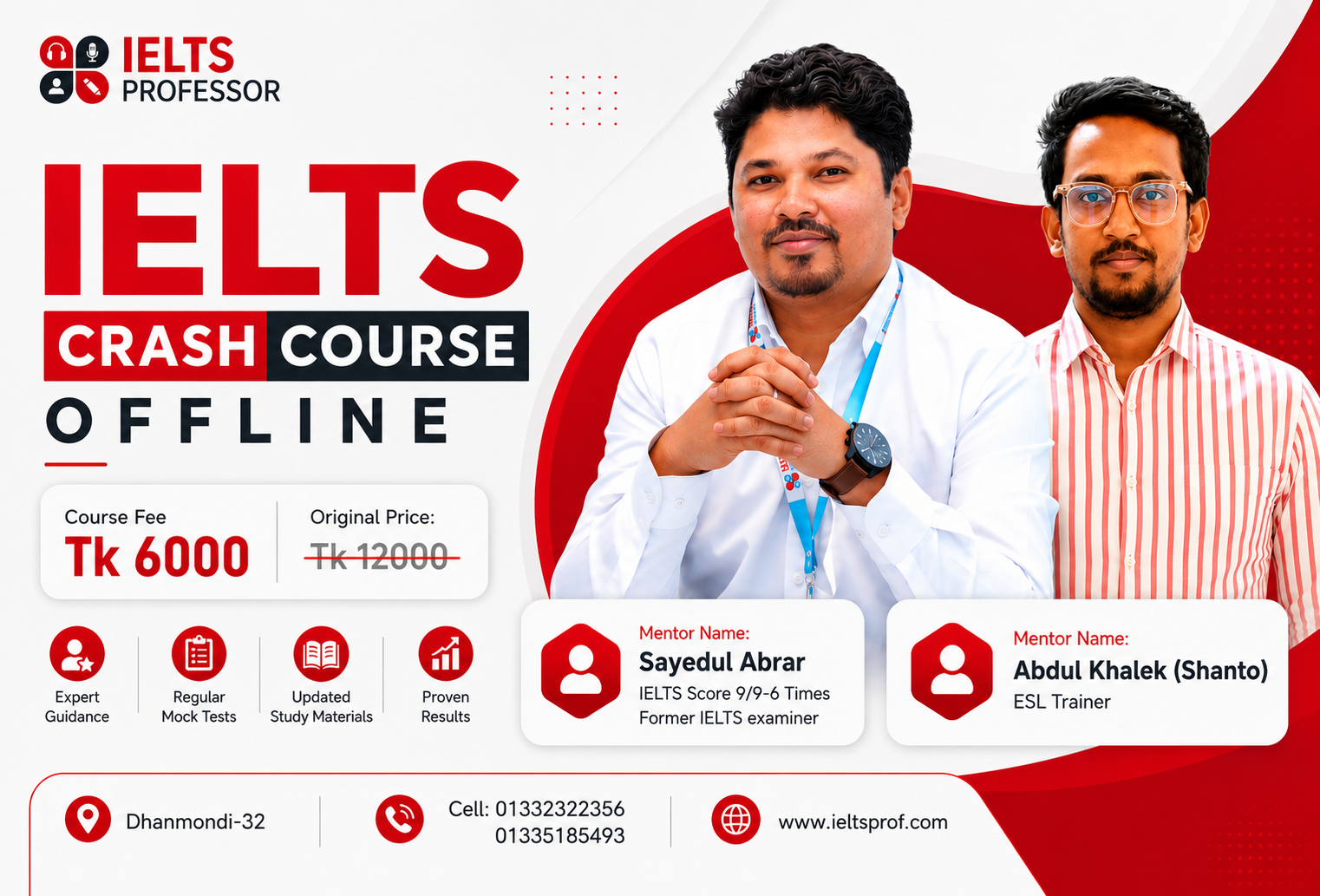
IELTS Crash Course
৳ 6000.00
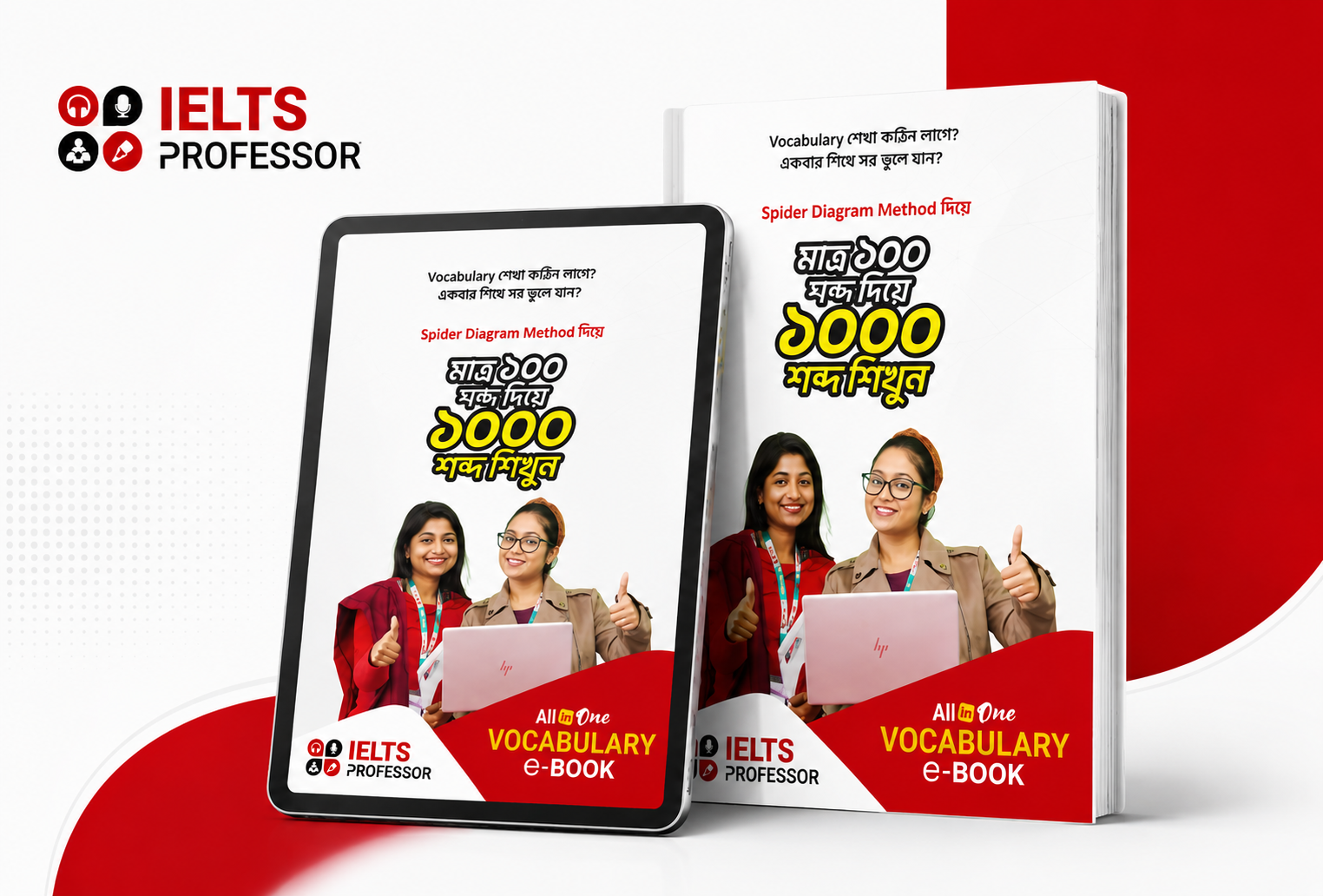
All in One Vocabulary
৳ 200.00

Premium 7+ IELTS Offline
৳ 14000.00